
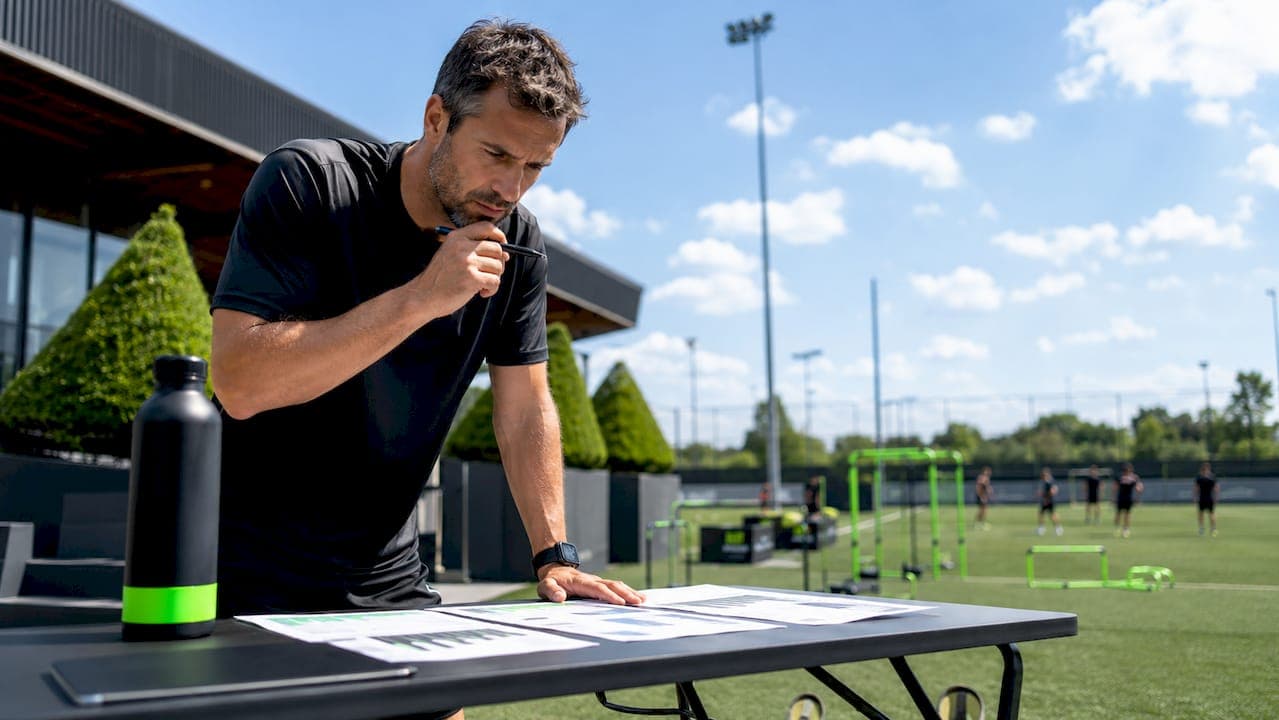
A performance gap in sports is defined as the measurable difference between an athlete's or team's current output and the standard required to meet tactical and competitive goals. Coaches and analysts who know how to identify performance gaps in sports teams gain a direct advantage: they can target training resources precisely, reduce injury risk, and build momentum where it counts. Lower-limb asymmetry exceeding 10% raises injury probability by 2.4 times, which means even subtle physical imbalances carry real consequences. The process draws on physical metrics, behavioral patterns, and tactical alignment to give you a complete picture of where your team stands and where it needs to go.
How to identify performance gaps in sports teams: key metrics and tools
The right metrics turn observation into evidence. Physical, biomechanical, and psychological data each reveal a different layer of team performance, and missing any one layer means missing gaps that will eventually cost you.
Physical and biomechanical metrics
High-precision IMU sensors operating at 800Hz capture ground contact time, propulsive impulse, and limb asymmetry with a resolution of 1.25ms. That level of detail matters because multi-variable composite testing can detect a 14% rise in ground contact time asymmetry even when jump height appears stable. A single test would miss that signal entirely. ACL risk scores, load balance scores, and recovery days are significant predictors of injury in collegiate athletes, making them non-negotiable inputs in any gap analysis.
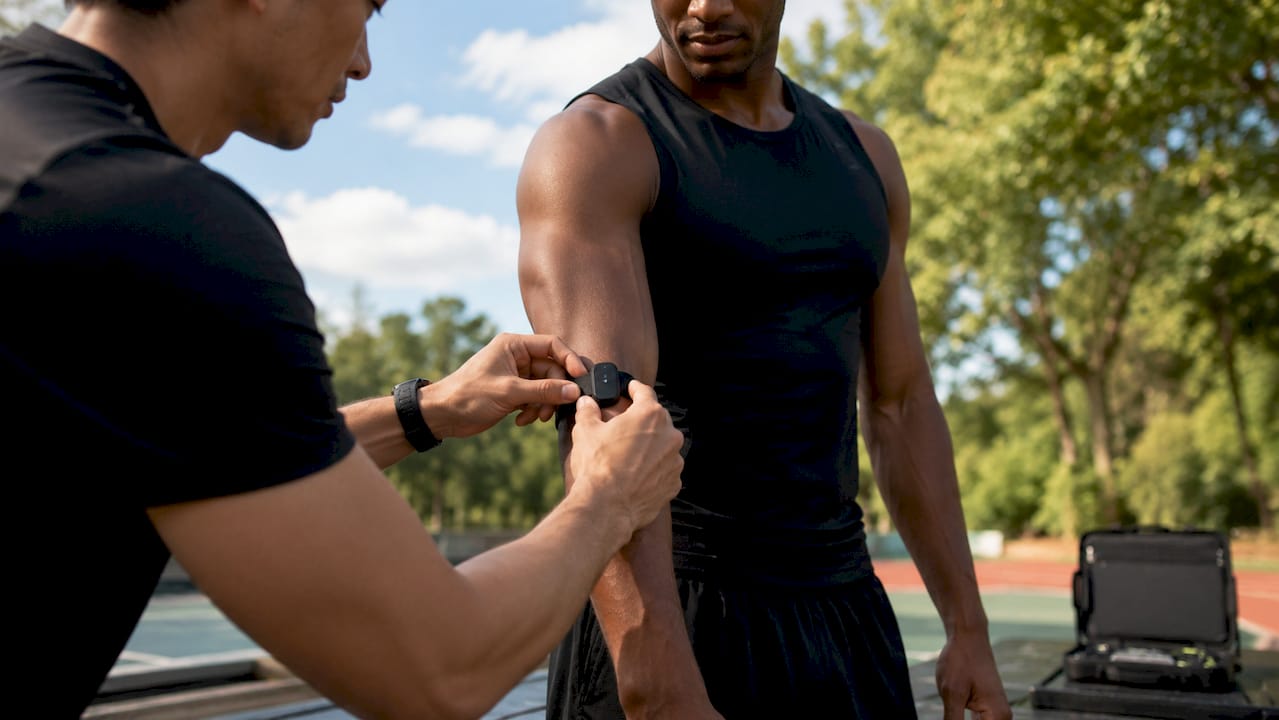
High-precision measurement tools improve coaching decision reliability by 38% compared to traditional observation. That gap between what you see and what the data shows is exactly where hidden deficits live.
Psychological and behavioral metrics
Physical data alone does not explain why a technically sound athlete underperforms under pressure. Behavioral patterns, including decision-making speed, stress responses, and communication habits, are measurable and directly affect team output. Behavioral patterns affecting athletic performance often operate below conscious awareness, which is why structured assessments are required to surface them.
| Metric category | Examples | Measurement approach |
|---|---|---|
| Physical | Sprint speed, power output, VO2 max | Wearable sensors, GPS trackers |
| Biomechanical | Limb asymmetry index, ground contact time | IMU sensors at 800Hz |
| Injury risk | ACL risk score, load balance, recovery days | Machine learning frameworks |
| Psychological | Stress response, focus, confidence | 360° behavioral assessments |
| Tactical | Decision timing, positional accuracy | Video analysis, GPS heat maps |
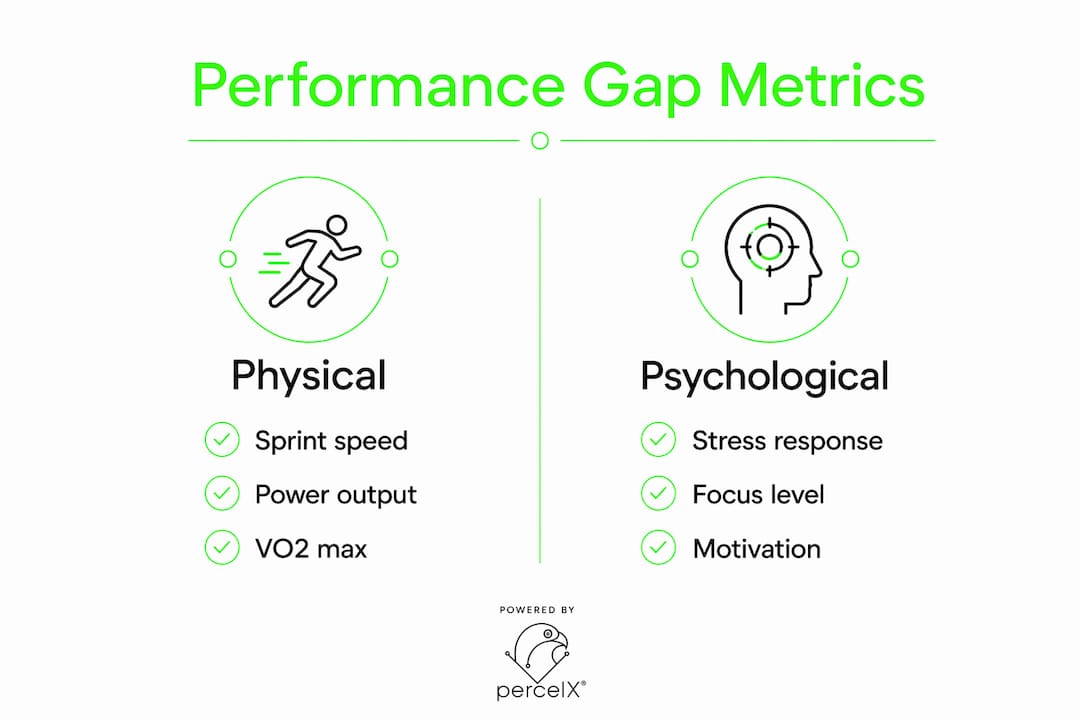
Pro Tip: Never assess psychological metrics in isolation. Pair them with physical output data to determine whether a behavioral pattern is causing a physical decline or responding to one.
How to execute a comprehensive performance gap analysis
A gap analysis without structure produces noise, not insight. The following process gives you a repeatable framework for assessing team performance at any point in the season.
-
Set measurable benchmarks aligned with tactical demands. Define what "good" looks like for each position and role before collecting a single data point. A benchmark for a defensive midfielder differs from one for a winger, even within the same team.
-
Use multi-variable composite testing. Run at least three tests that measure related but distinct variables. Ground contact time, jump height, and propulsive impulse together reveal what no single test can. This approach captures micro-signals of performance decline that are invisible to single-variable methods.
-
Combine quantitative data with qualitative observation. Numbers tell you what happened. Observation tells you why. A coach who notices an athlete favoring one side during warm-up has context that no sensor provides on its own.
-
Conduct structured self and peer assessments. Team assessments combining self, peer, and manager evaluations deliver more accurate and actionable insights than any single-source review. Multi-source feedback surfaces collaboration gaps, communication breakdowns, and technical skill deficits that top-down reviews miss.
-
Schedule reassessments every 4–6 weeks. A single snapshot is not a gap analysis. It is a starting point. Regular retesting tracks whether interventions are working and flags new issues before they compound.
- Collect baseline data at the start of each training block
- Flag any asymmetry index above 10% for immediate follow-up
- Document environmental conditions during testing to control for variability
- Share results with athletes within 48 hours to maintain trust and relevance
Pro Tip: Build your reassessment schedule into the season calendar before the season starts. Ad hoc testing gets skipped when competition pressure rises.
How to interpret performance data within your team's tactical framework
Raw data without context produces misdiagnosis. A number that looks like a weakness may be a deliberate tactical adaptation, and correcting it could reduce effectiveness rather than improve it.
Consistent vs. inconsistent asymmetries
Inconsistent asymmetries across tests often reflect measurement noise or condition variability rather than true deficits. A genuine neuromuscular gap shows up consistently across multiple tests and conditions. If an asymmetry appears in one session and disappears in the next, investigate the testing conditions before prescribing an intervention.
Role-specific thresholds and tactical trade-offs
A performance gap's meaning depends on alignment with the team's tactical requirements. A throwing athlete who shows shoulder asymmetry may be expressing a sport-specific adaptation, not a deficit. Treating that adaptation as a problem creates a new one. Always map findings against the demands of the athlete's specific role before drawing conclusions.
- Confirm asymmetry is consistent across at least two separate testing sessions
- Cross-reference physical findings with the athlete's positional demands
- Distinguish between deliberate tactical trade-offs and genuine deficits
- Use performance profiling in sport to map individual profiles against team requirements
Communicating findings constructively
Psychological safety influences the honesty and usefulness of team performance data. Teams that perceive assessments as developmental share more accurate ratings, which improves data quality for everyone. Frame every finding as a growth opportunity, not a verdict.
"The goal of a performance assessment is not to rank athletes. It is to give each person the clearest possible picture of where focused effort will produce the greatest return. When athletes trust that process, the data gets better and so do the results."
What are the most common pitfalls when assessing team performance?
Even experienced coaches fall into predictable traps during gap analysis. Knowing them in advance saves you from repeating them.
- Treating assessments as disciplinary reviews. Viewing assessments as punitive rather than developmental undermines trust and reduces the accuracy of self-reported data. Athletes who fear consequences will manage their numbers, not their performance.
- Skipping follow-up. An assessment without a time-bound development plan is a missed opportunity. Continuous improvement requires linking each identified gap to a specific action with a deadline.
- Over-relying on a single test variable. One metric cannot capture the complexity of athletic performance. Single-test reliance produces false confidence and misses the compound signals that matter most.
- Ignoring measurement noise. Variable results across sessions often reflect testing conditions, fatigue, or equipment calibration, not real performance changes. Treat inconsistent findings as a data quality issue first.
- Underweighting human factors. Team dynamics, communication patterns, and leadership behavior all affect output. A purely quantitative approach misses the behavioral layer that often explains why physical gaps exist.
Pro Tip: After every assessment cycle, ask your athletes one question: "Did this process feel fair and useful?" Their answer tells you more about the health of your assessment culture than any metric.
How to build a continuous improvement cycle from gap to growth
Identifying a gap is the start, not the finish. The cycle below turns findings into measurable progress.
-
Link each gap to a specific development action. Vague goals produce vague results. "Improve left-leg propulsive impulse by 8% within six weeks" is a development action. "Work on leg strength" is not.
-
Use behavioral intelligence tools to monitor progress. Physical metrics track what the body does. Behavioral metrics track how the mind responds to pressure, feedback, and change. Both are required for a complete picture. Tracking mental performance progress gives coaches a leading indicator of whether physical improvements will hold under competition conditions.
-
Schedule reassessments every 4–6 weeks. Retesting at this frequency catches drift early and confirms that interventions are producing the intended effect.
-
Run transparent feedback loops with athletes and staff. Share data openly. Explain what changed, what improved, and what the next focus area is. Transparency builds the psychological safety that makes future assessments more accurate.
-
Use technology dashboards for ongoing monitoring. Centralized dashboards that aggregate physical, biomechanical, and behavioral data give coaches a real-time view of team readiness. They also make it easier to measure team transformation over time and communicate progress to athletes and stakeholders.
Key Takeaways
Identifying performance gaps in sports teams requires a multi-dimensional approach that combines biomechanical data, behavioral assessments, and tactical context to produce findings that are both accurate and actionable.
| Point | Details |
|---|---|
| Use multi-variable testing | Composite tests catch micro-signals that single-variable methods miss entirely. |
| Apply the 10% asymmetry threshold | Lower-limb asymmetry above 10% raises injury risk by 2.4 times and requires immediate follow-up. |
| Frame assessments as developmental | Psychological safety improves data accuracy; punitive framing reduces it. |
| Interpret data against tactical roles | A finding that looks like a weakness may be a sport-specific adaptation. |
| Build a retesting cycle | Reassess every 4–6 weeks to confirm interventions are working and catch new gaps early. |
The layer most coaches skip
Working with teams across multiple sports, the pattern I see most often is not a lack of data. It is a lack of integration. Coaches collect physical metrics, analysts run video reviews, and someone else handles athlete wellbeing surveys. Those three streams rarely meet in the same room at the same time.
The teams that close gaps fastest are the ones that treat physical, psychological, and tactical data as a single system. A drop in sprint speed means more when you also know the athlete scored low on recovery confidence that week. A tactical positioning error means more when you can see the behavioral pattern driving it. The synergy between those data streams is where the real insight lives.
Psychological safety is the factor I see neglected most consistently. Athletes who do not trust the assessment process manage their numbers. They present the version of themselves they think you want to see. That corrupts the data at the source, and no amount of analytical sophistication fixes corrupted inputs. Build the culture first. The data quality follows.
The most effective approach is not the most technologically advanced one. It is the one your athletes believe in. Customized, context-specific assessments that respect individual roles and team dynamics produce better results than generic protocols applied at scale. Start with what your team actually needs, not what the latest sensor can measure.
— Percell
Percelx: behavioral intelligence for sports team performance
Coaches and analysts who want to move beyond isolated metrics need a platform that connects physical, psychological, and tactical data in one place.

Percelx delivers a 360° behavioral intelligence platform built for teams that take performance seriously. Its API-first architecture means you can integrate existing sensor data, video analysis outputs, and psychological assessments into a single dashboard. The Percelx Developer Platform gives your technical staff the tools to build time-bound development tracking directly into your team's workflow. With a 4.9-star satisfaction rating, Percelx supports coaches and analysts who need measurable results, not just reports.
FAQ
What is a performance gap in sports?
A performance gap in sports is the measurable difference between an athlete's current output and the standard required by their role and team tactics. It can be physical, psychological, or tactical in nature.
How often should coaches assess team performance?
Reassessments every 4–6 weeks give coaches enough data to confirm whether interventions are working and catch new gaps before they compound into larger problems.
Why is multi-variable testing better than single tests?
Multi-variable composite testing detects subtle declines that single tests miss. For example, ground contact time asymmetry can rise by 14% even when jump height remains stable, a signal invisible to single-variable methods.
How does psychological safety affect performance assessments?
Teams that perceive assessments as developmental share more accurate self-reported data, which improves the quality of findings and the effectiveness of follow-up interventions.
What is the 10% asymmetry threshold in sports science?
Lower-limb asymmetry exceeding 10% increases injury probability by 2.4 times. Any athlete crossing that threshold requires immediate targeted intervention to reduce injury risk.