
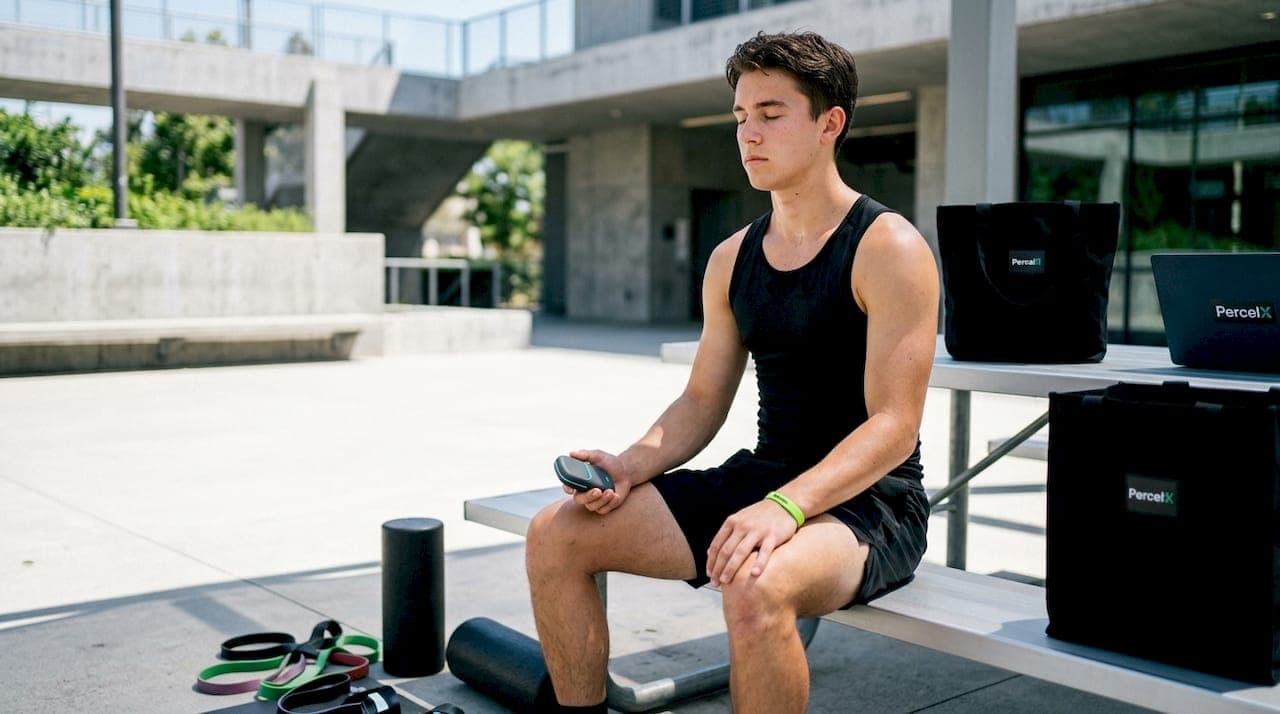
Pressure management strategies for athletes are specialized psychological and physiological techniques designed to reduce competitive anxiety and improve mental resilience under high-stakes conditions. Sport psychology defines this field as the deliberate regulation of arousal, attention, and emotion to keep performance at its peak. The Yerkes-Dodson Law confirms that anxiety fuels performance when kept at an optimal level. The goal is never to eliminate pressure. The goal is to regulate it so it works for you, not against you. Understanding performance anxiety in sport is the first step toward doing something about it.
1. What are the most effective psychological techniques for managing pressure?
Psychological skills training (PST) is the foundation of every serious mental performance program. It covers mindfulness, cognitive restructuring, mental imagery, and formalized Psychological Skills Training Programs (PSTP). Each technique targets a different dimension of competitive anxiety, and the research now gives coaches and athletes clear guidance on which to prioritize.

Mindfulness reduces competitive anxiety with a moderate effect size of g = -0.53. That number means athletes who complete a structured mindfulness protocol experience meaningfully less anxiety than those who do not. Protocols lasting 6–8 weeks with 10 or more contact hours produce the most consistent results. Mindfulness reduces cognitive anxiety more than somatic anxiety, so it works best for athletes whose pressure shows up as racing thoughts rather than physical tension.
Cognitive restructuring is a core tool from cognitive behavioral therapy (CBT). It teaches athletes to identify negative self-talk, challenge its accuracy, and replace it with realistic, performance-focused statements. A sprinter who thinks "I always choke in finals" learns to reframe that as "I have trained for this moment and I know my process." The shift is not about false positivity. It is about accuracy.
Mental imagery builds confidence and emotional control by rehearsing performance in vivid detail before competition. Elite athletes use it to pre-experience success, manage nerves, and reinforce technical skills without physical repetition. Research shows imagery favors elite athletes because their performance experience gives the mental rehearsal more realistic texture.
- Practice mindfulness for at least 10 minutes daily during the 6–8 week protocol
- Use cognitive restructuring journals to track and reframe negative thought patterns
- Schedule imagery sessions immediately before sleep or before training for maximum retention
- Work with a sport psychologist to build a personalized PSTP
Pro Tip: Anchor your imagery sessions to a specific physical cue, like touching your wristband, so the calm state becomes retrievable on demand during competition.
2. How do breathing exercises and biofeedback support pressure management?
Physiological techniques target the body's stress response directly. They work fastest when the nervous system is already activated, making them the go-to tools for game-day pressure and pre-competition nerves.
The 4-7-8 breathing technique activates the parasympathetic nervous system within minutes. The pattern is simple: inhale for 4 seconds, hold for 7 seconds, exhale for 8 seconds. The extended exhale is what drives the calming effect. It signals safety to the nervous system and lowers perceived anxiety and cortisol levels. Athletes who practice this consistently can trigger the response automatically when pressure spikes.
Biofeedback takes physiological regulation further by giving athletes real-time data on their body's stress signals. Heart rate variability (HRV) biofeedback and neurofeedback are the two most studied methods. Both improve autonomic regulation and emotional control. Research shows biofeedback benefits junior athletes more than elite athletes for anxiety reduction, because younger athletes have more room to develop physiological self-regulation skills.
- Use 4-7-8 breathing in the locker room, on the bench, or during warm-up
- Track HRV daily to identify patterns between recovery quality and anxiety levels
- Pair neurofeedback sessions with mental performance coaching for best results
- Allow 4–6 weeks of consistent practice before expecting automatic recall under pressure
Pro Tip: Consistent practice is what makes breathing techniques automatic. Athletes who only use them on game day rarely get the full benefit.
3. What role does pressure training play in preparing athletes for high-stakes moments?
Pressure training is the deliberate exposure to simulated competitive stress during practice. It builds resilience, composure, and the ability to perform when the stakes are real. Done well, it is one of the most effective coping mechanisms for athletes at every level.
Research is clear that pressure training requires pedagogical intent. That means coaches must design pressure scenarios with a clear learning goal, not just pile on stress to toughen athletes up. Qualitative interviews with coaches and athletes confirm that relational trust and transparent communication are non-negotiable. Athletes need to know why they are being pushed and what the boundaries are.
"Pressure training must be delivered with pedagogical intent, relational trust, and transparent communication to prevent harm and ensure it remains a productive challenge. Continuous adaptation to athlete emotional states is what separates effective pressure training from harmful overload." — Reflexive thematic analysis, Psychology of Sport and Exercise, 2026
Dynamic calibration is the practical skill coaches need most. This means reading athlete emotional states in real time and adjusting training intensity accordingly. An athlete who is already overwhelmed does not benefit from more pressure. They benefit from a structured debrief and a reset. Calibrating pressure dynamically to emotional states is what separates productive challenge from harm.
Building self-mastery through pressure training also develops emotional regulation as a transferable skill. Athletes who learn to stay composed in a high-pressure drill carry that composure into competition. The mental toughness strategies that work in training become automatic under real competitive conditions.
4. How should athletes and coaches select and combine strategies effectively?
No single technique works for every athlete. The most effective approach matches the intervention to the athlete's level, anxiety type, and personal goals. Research using Bayesian analysis confirms that intervention effectiveness varies by athlete level. This is not a minor distinction. It changes which techniques coaches should prioritize.
Here is a practical framework for matching strategies to athlete profiles:
- Elite athletes respond best to mental imagery, biofeedback, and PSTP. Their experience base makes imagery vivid and credible. Biofeedback gives them data to refine already-developed self-regulation skills.
- Semi-elite athletes benefit most from Acceptance and Commitment Therapy (ACT), mindfulness, and CBT. These techniques build the psychological flexibility they need as competitive demands increase.
- Junior athletes gain the most from biofeedback and structured breathing protocols. Physiological self-regulation is a foundational skill they are still developing.
Cognitive anxiety and somatic anxiety also require different tools. Cognitive anxiety, which shows up as worry and distraction, responds well to mindfulness and cognitive restructuring. Somatic anxiety, which shows up as physical tension and elevated heart rate, responds better to breathing techniques and biofeedback.
The ESSA position statement on performance under pressure recommends integrating cognitive-behavioral, mindfulness-based, and physiological strategies into daily training routines. That integration builds resilience across all three dimensions of stress. Consulting a sport psychology professional accelerates the process and prevents athletes from wasting time on techniques that do not fit their profile.
Athletes should also choose techniques based on personal preference and goals rather than claims of universal superiority. Adherence matters. A technique an athlete believes in and practices consistently will outperform a theoretically superior technique they use inconsistently.
Pro Tip: Review your mental performance approach every 6–8 weeks. What works at the start of a season may need adjustment as competition intensity increases.
Redirecting focus away from suppressing anxiety and toward naming it and shifting attention to external cues is one of the most underused performance anxiety solutions. Suppression consumes cognitive resources. Acceptance and redirection free them up for execution.
Key takeaways
The most effective pressure management approach combines psychological and physiological techniques tailored to the athlete's level, anxiety type, and personal goals.
| Point | Details |
|---|---|
| Regulate, don't eliminate | Optimal arousal enhances performance; the goal is regulation, not anxiety removal. |
| Match technique to athlete level | Elite athletes benefit from imagery and PSTP; junior athletes gain more from biofeedback and breathing. |
| Mindfulness requires commitment | A 6–8 week protocol with 10+ contact hours produces meaningful anxiety reduction. |
| Pressure training needs trust | Coaches must use pedagogical intent and transparent communication to prevent harm. |
| Combine approaches | Integrating cognitive, mindfulness, and physiological strategies builds the most complete resilience. |
What I've learned about pressure management that most coaches won't tell you
The biggest mistake I see athletes make is treating pressure management like a pre-game ritual rather than a year-round training discipline. They pull out a breathing technique the night before a championship and wonder why it does not work. Techniques like 4-7-8 breathing and anchoring gestures require weeks of consistent practice before they become automatic. You cannot borrow a skill you have not built.
The second mistake is chasing the technique that sounds most impressive. I have worked with athletes who spent months on neurofeedback when a consistent mindfulness practice would have served them better and cost far less. The research is clear: personal preference and adherence predict outcomes more than technique prestige. Pick what you will actually do, then do it consistently.
The most important shift I have seen athletes make is moving from anxiety suppression to anxiety acceptance. Trying to eliminate nerves before a big game is a losing battle. Naming the feeling, acknowledging it, and redirecting attention to execution cues is what actually works. That shift does not happen overnight. It requires mental performance coaching and honest self-assessment. But when it clicks, performance under pressure stops being a problem and starts being a skill.
One more thing: coaches carry enormous responsibility in pressure training. Pushing athletes harder is not the same as preparing them better. The research on pressure training is unambiguous. Relational trust and transparent communication are prerequisites, not nice-to-haves. If your athletes do not feel safe enough to tell you when they are overwhelmed, your pressure training program is creating harm, not resilience.
— Percell
How Percelx supports your mental performance development
Athletes who understand their behavioral patterns perform better under pressure. Percelx uses a 360° behavioral assessment to surface the hidden patterns that affect decision-making, emotional regulation, and competitive focus. That data becomes a personalized development plan, not a generic checklist.

The Percelx behavioral intelligence platform complements every psychological and physiological strategy covered in this article. It gives athletes and coaches the data layer that makes personalization possible. Instead of guessing which techniques fit your profile, you get a clear picture of your behavioral baseline and where targeted intervention will have the most impact. Percelx holds a 4.9-star satisfaction rating and delivers customized plans instantly. Explore the Percelx developer platform to see how behavioral intelligence integrates with your existing performance program.
FAQ
What are the best pressure management strategies for athletes?
The most effective strategies combine mindfulness, cognitive restructuring, mental imagery, and physiological techniques like 4-7-8 breathing and biofeedback. Research shows that integrating cognitive, mindfulness-based, and physiological approaches produces the most complete resilience.
How long does it take for mindfulness to reduce competitive anxiety?
Mindfulness-based interventions reduce competitive anxiety with a moderate effect size after 6–8 weeks of practice with 10 or more contact hours. Shorter or inconsistent protocols produce weaker results.
Should elite and junior athletes use different techniques?
Yes. Elite athletes benefit most from mental imagery, biofeedback, and PSTP, while junior athletes gain more from biofeedback and structured breathing protocols. Matching the technique to athlete level significantly improves outcomes.
What is the role of a coach in pressure training?
Coaches must deliver pressure training with pedagogical intent, relational trust, and transparent communication. Dynamic calibration of intensity based on athlete emotional states is what separates productive challenge from harmful overload.
How do athletes avoid choking under pressure?
Redirecting focus from suppressing anxiety toward naming it and shifting attention to external execution cues prevents choking. Suppression consumes cognitive resources; acceptance and redirection free them up for performance.