
Confidence is often treated like a switch. Flip it on and you perform better. But the psychology of sports confidence is far more layered than any pregame pep talk suggests. The role of confidence in athletic performance is real, measurable, and backed by decades of research. Yet that same research tells us something most coaches and athletes overlook: self-belief alone does not carry you across the finish line. What actually drives performance is how confidence interacts with self-efficacy, coaching quality, anxiety management, and your ability to stay mentally flexible under pressure. This article breaks down exactly how that works.
Table of Contents
- Key takeaways
- The role of confidence in athletic performance: what the psychology actually says
- How coaching shapes athlete confidence
- The realistic impact of confidence on performance
- Strategies to build confidence under pressure
- My take on confidence as a performance resource
- Take your performance to the next level with Percelx
- FAQ
Key takeaways
| Point | Details |
|---|---|
| Confidence is a dynamic resource | Self-belief shifts based on environment, coaching, and recent performance. It is not a fixed personality trait. |
| Self-efficacy drives performance most | Task-specific belief in your ability mediates the link between confidence and actual results. |
| Coaching environment shapes confidence | Supportive coaching builds psychological safety and self-efficacy; controlling coaching does the opposite. |
| Effect sizes are modest but real | Meta-analyses show confidence improves performance with effect sizes of roughly 0.25 to 0.30. Pair it with skill work. |
| Psychological flexibility is the stabilizer | Interventions that reduce anxiety and build mental flexibility maintain confidence even after mistakes or setbacks. |
The role of confidence in athletic performance: what the psychology actually says
Most athletes understand confidence as a feeling. Sports psychologists call it something more specific. The formal term is sport confidence, defined as the degree of certainty you have about your ability to succeed in sport. It sits alongside two related constructs you need to understand: self-efficacy and mental toughness.
Self-efficacy is task-specific. It is not "I believe in myself generally." It is "I believe I can execute this free throw under pressure right now." Albert Bandura's original framework positioned self-efficacy as one of the strongest predictors of performance because it is tied directly to behavior. Sport confidence is broader. It covers your overall belief in your athletic capability across situations.
Mental toughness is the umbrella. It includes confidence, but also resilience, focus, and the ability to perform when conditions are difficult. Research confirms that sport confidence correlates strongly with mental toughness at r = .67 to .70, and that confidence mediates the relationship between athletic identity and stress readiness in female athletes. That means your sense of who you are as an athlete feeds into your confidence, which then shapes how you handle competitive stress.
Here is what that means practically:
- Confidence is not a fixed trait. It is a psychological resource that gets built, depleted, and rebuilt.
- Self-efficacy is the mechanism. Confidence matters most when it translates into specific task beliefs.
- Mental toughness in athletics is the long-game outcome. You build it by consistently strengthening both confidence and self-efficacy over time.
- Your environment either deposits into or withdraws from your confidence account every single day.
Understanding these distinctions changes how you train your mind. You stop chasing a general "feel good" state and start targeting specific beliefs tied to specific skills. That is where sports psychology fundamentals become directly useful for athletes at any level.
Pro Tip: After each training session, rate your self-efficacy for one specific skill on a scale of 1 to 10. Track it weekly. You will start to see exactly where your belief gaps are, not just a vague sense that your confidence is "off."
How coaching shapes athlete confidence
You can do all the mental work in the world and still have your confidence eroded by the wrong training environment. This is one of the most underappreciated factors in the psychology of sports confidence. Coaching behavior is not just a performance variable. It is a psychological one.
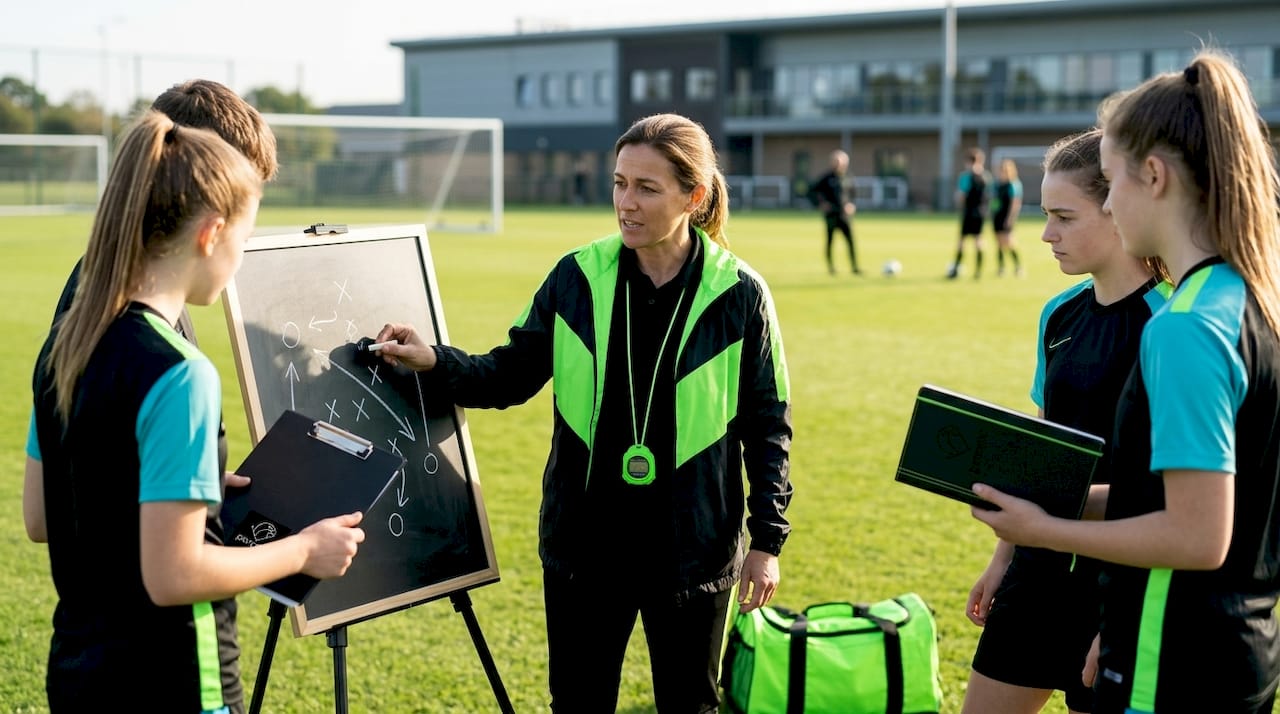
Recent research makes this direct: supportive coaching improves perceived performance indirectly through two pathways, psychological safety and self-efficacy. When athletes feel psychologically safe, they take risks, admit weaknesses, and ask for help. Those behaviors accelerate skill development and, in turn, build real self-efficacy. Controlling coaching, the kind that relies on criticism, pressure, and conditional approval, disrupts both pathways. It reduces self-efficacy and creates an environment where athletes perform defensively rather than freely.
The data on motivational climate reinforces this. Autonomy-supportive environments show a correlation of r = 0.42 with motivation and cognition, and r = 0.27 with emotional wellbeing. Performance itself shows a more indirect effect at r = 0.19. The takeaway is that coaching shapes your internal state first, and performance follows.
"Confidence is not just a trait but dynamically shaped by environmental factors like coaching and psychological safety, which athletes and coaches can influence." — Psychological dynamics shaping performance perception in athletes
What does a confidence-building environment actually look like in practice?
- Coaches give feedback tied to effort and process, not just outcomes.
- Mistakes are treated as information, not failures.
- Athletes have input into training decisions, which builds ownership and internal motivation.
- Performance assessments happen regularly and situationally, not just at the start of a season.
That last point matters more than most programs acknowledge. Confidence should be measured situationally, ideally after specific sessions, so coaches can adjust their approach in real time. A pre-season confidence assessment tells you almost nothing about how an athlete is feeling three weeks into a high-pressure competition schedule. Culture-focused training frameworks that prioritize psychological safety, like those explored in evidence-based coaching models, show measurable gains in both athlete confidence and team cohesion.
The realistic impact of confidence on performance
Here is the honest truth that most confidence-building content skips: confidence has a real but modest effect on sport performance. You deserve to know the actual numbers.
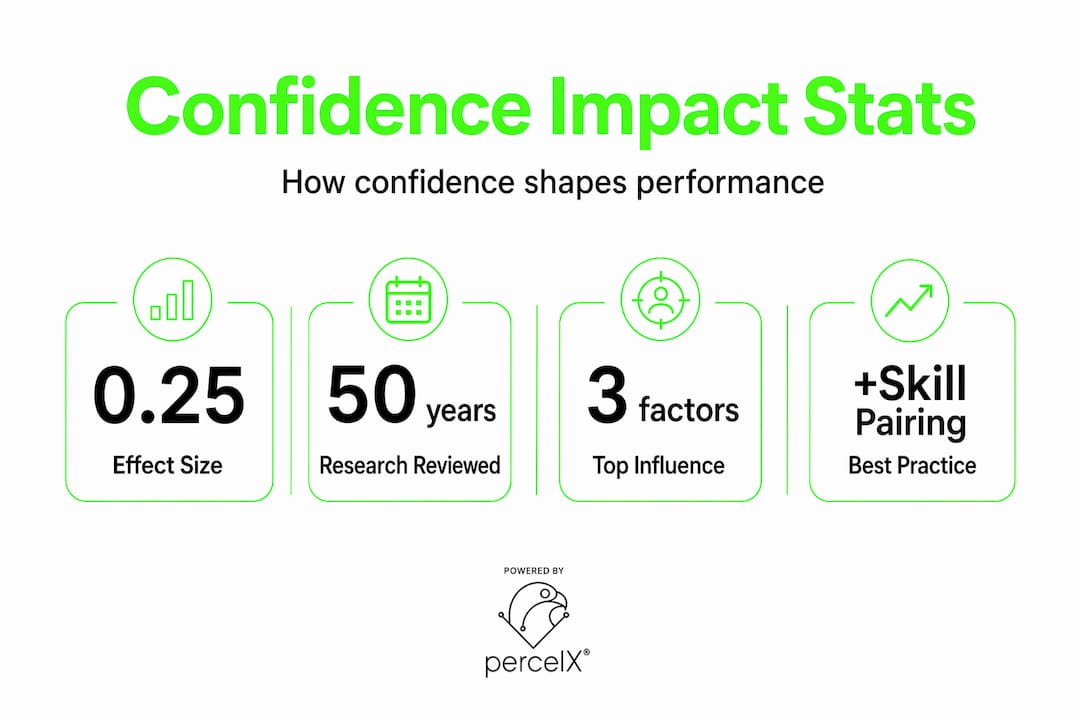
A scoping review mapping 50 years of sport psychology meta-analyses found consistent effect sizes of approximately 0.25 to 0.30 for confidence on performance. That is meaningful. It is not transformative on its own. For context, an effect size of 0.25 means confidence explains roughly 6% of performance variance. Skill, physical preparation, tactics, recovery, and team dynamics account for the rest.
| Psychological factor | Effect size on performance | Practical implication |
|---|---|---|
| Confidence / self-belief | ~0.25 to 0.30 | Real but modest; combine with skill training |
| Anxiety reduction | Up to D = 1.33 | High impact; target anxiety management actively |
| Autonomy-supportive climate | r = 0.19 (performance) | Works through motivation and cognition first |
| Self-efficacy (task-specific) | Strongest mediator | Build through repetition and mastery experiences |
The implication is not that confidence work is wasted. It is that confidence building for athletes works best when it is integrated with skill development, goal setting, and performance repetitions, not treated as a standalone intervention.
Pro Tip: When you set a confidence-building goal, pair it with a specific skill goal. For example, "I will build confidence in my serve" becomes "I will practice 50 pressure serves three times this week and track my success rate." The skill reps create the evidence your brain needs to believe.
Strategies to build confidence under pressure
Knowing that confidence matters is not enough. You need practical tools that hold up when competition stress is at its highest. The most effective approaches combine anxiety management, psychological flexibility, and attention training.
Acceptance and commitment-based training
One of the most evidence-backed programs for athletes is the SmartACT protocol, a 7-week multimodal intervention built on Acceptance and Commitment Therapy principles. In adolescent athletes, SmartACT significantly improved attention, with attention scores rising from 457.83 to 600.24, while experiential avoidance dropped from 18.48 to 12.80. In plain terms, athletes became better at staying focused and stopped fighting their own anxious thoughts. That shift is what keeps confidence intact after a mistake in competition.
Anxiety management as a confidence lever
Reducing competitive anxiety is one of the highest-impact moves you can make. Psychological interventions targeting anxiety show effect sizes up to D = 1.33 for anxiety reduction, with direct links to performance improvement. Self-confidence and self-efficacy are the mechanisms that connect those two outcomes.
Here is a practical framework for building and maintaining confidence under pressure:
- Identify your anxiety triggers. Write down the specific situations where your confidence drops most. Before a big game? After a mistake? When a coach is watching? Naming triggers is the first step to managing them.
- Practice psychological acceptance. Instead of trying to eliminate nervous feelings, practice acknowledging them without reacting. ACT-based techniques train you to observe anxiety as information rather than a threat.
- Use mastery-based repetitions. Confidence built on real skill reps is far more durable than confidence built on affirmations. Schedule deliberate pressure simulations in training.
- Implement post-session self-efficacy tracking. Rate your belief in specific skills after each session. This creates a data trail that shows you genuine progress over time.
- Build a reset routine. A short, repeatable routine (three deep breaths, a physical cue, a focus word) gives your nervous system a reliable anchor when confidence wavers mid-competition.
Beyond structured programs, a skills development intervention with 63 professional basketball players showed significant improvements in mental toughness and reductions in competitive anxiety. The program combined sport-specific skill work with psychological training, reinforcing the point that the two must go together.
For athletes thinking about long-term development, building confidence is part of a larger intentional performance growth plan that accounts for both psychological and physical variables across an entire season.
My take on confidence as a performance resource
I have spent years working at the intersection of behavioral patterns and athletic performance, and the most persistent mistake I see is treating confidence like a light switch. Coaches give pep talks. Athletes repeat affirmations. Then they wonder why it does not hold up at minute 80 of a tight game.
What I have learned is that confidence is more like a bank account than a switch. Every quality training rep, every honest piece of feedback, every moment of psychological safety in your environment makes a deposit. Every avoided challenge, every harsh self-judgment, every controlling coaching interaction makes a withdrawal. The balance at any given moment is what shows up on the field.
The athletes who perform most consistently are not the ones who feel the most confident before competition. They are the ones who have built enough psychological flexibility to stay functional when confidence dips. That is the real mental edge. Not the absence of doubt, but the trained ability to act despite it.
My honest advice: stop measuring confidence only before a season starts. Measure it situationally, after specific sessions and competitions. Use that data to guide your interventions. And never rely on self-belief alone. Pair every confidence cue with real skill work, real pressure exposure, and real feedback. That combination creates the kind of self-efficacy that actually moves performance numbers.
— Percell
Take your performance to the next level with Percelx
Understanding the psychology of confidence is one thing. Applying it with precision is another. Percelx gives athletes and coaches the tools to track behavioral patterns tied to confidence, self-efficacy, and psychological readiness in real time.

Through the Percelx platform, you get a 360° behavioral assessment that reveals exactly where your mental performance gaps are and delivers a personalized transformation plan to address them. For coaches and sports organizations, the Percelx enterprise solution supports team-wide confidence tracking and targeted psychological interventions. Developers building performance tools can access behavioral intelligence capabilities through the Percelx API. The result is measurable growth, not guesswork.
FAQ
What is the role of confidence in athletic performance?
Confidence functions as a psychological resource that influences how athletes approach competition, manage stress, and execute under pressure. Research shows it has a consistent but modest effect on performance, with effect sizes around 0.25 to 0.30, meaning it works best when combined with skill training and anxiety management.
How does self-efficacy differ from general confidence?
Self-efficacy is task-specific belief in your ability to execute a particular skill in a specific situation, while sport confidence is a broader sense of overall athletic capability. Self-efficacy is the stronger predictor of performance because it is directly tied to behavior and measurable skill execution.
Can coaching really affect an athlete's confidence?
Yes. Supportive coaching builds psychological safety and self-efficacy, both of which improve perceived performance. Controlling coaching does the opposite. The effect works indirectly, shaping motivation and cognition first, with performance following as a downstream outcome.
What are the most effective confidence-building strategies under pressure?
ACT-based programs like SmartACT, anxiety reduction interventions, mastery-based skill repetitions, and post-session self-efficacy tracking are among the most evidence-supported approaches. Combining psychological flexibility training with real pressure simulations produces the most durable confidence gains.
How do I know if my confidence is actually affecting my performance?
Track your self-efficacy ratings for specific skills after training sessions and compare them to your competition results over time. Situational measurement, rather than pre-season surveys, gives you the clearest picture of where confidence is helping or limiting your performance.