

Improving decision-making across leadership teams is achieved by combining clear decision roles, evidence-based appraisal, and responsible AI use within a culture that actively welcomes dissent. The frameworks and governance standards that define high-performing executive teams in 2026 are not abstract theory. They are structured, repeatable, and measurable. Whether you lead a five-person executive committee or a distributed C-suite, the same core disciplines apply: role clarity, impartial analysis, and deliberate communication practices that surface the best thinking in the room.
What are the essential frameworks for effective team decision-making?
The most common reason leadership teams make poor decisions is not a lack of intelligence. It is a lack of structure. Decision quality failures most often occur at handoff moments, when no one is certain who owns the final call or who must be consulted before it is made.
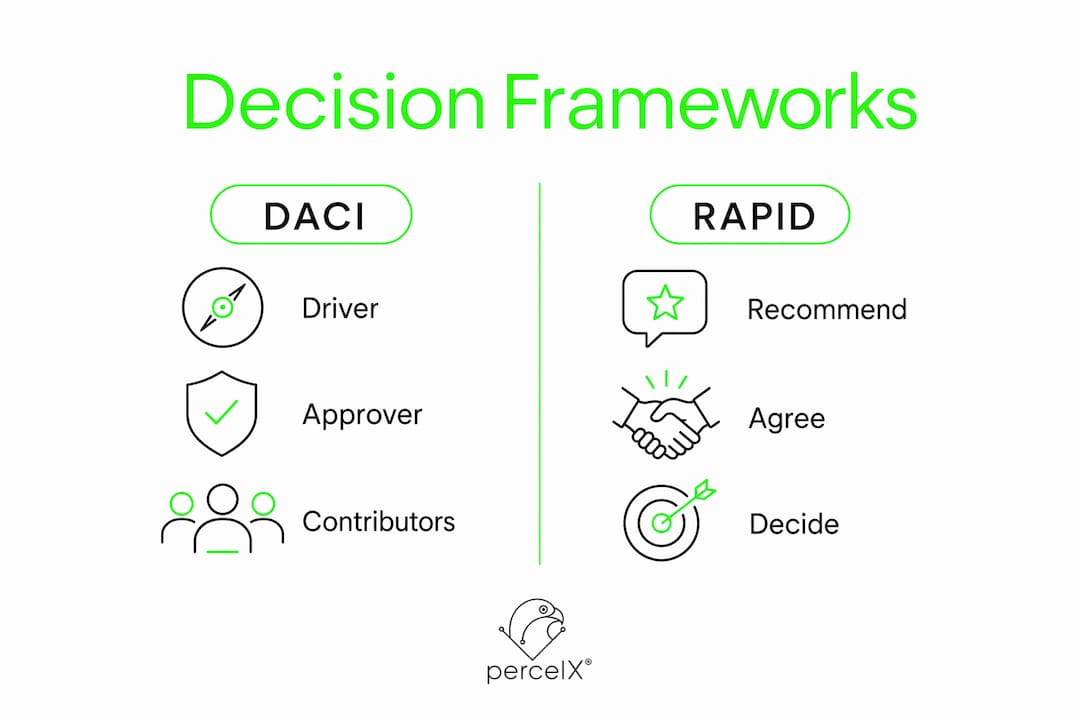
The DACI framework addresses this directly. DACI assigns four roles to every significant decision:
- Driver: The person responsible for moving the decision forward and gathering input
- Approver: The single individual with final authority to say yes or no
- Contributors: Subject-matter experts who provide input but do not vote
- Informed: Stakeholders who need to know the outcome but are not part of the process
DACI role clarity reduces ambiguity and accelerates group decisions by making authority explicit before deliberation begins. That distinction matters enormously. Teams that define roles after debate has started spend energy relitigating who has standing to weigh in, rather than evaluating the actual options.
Two comparable frameworks are worth knowing. RAPID (Recommend, Agree, Perform, Input, Decide) from Bain & Company separates recommendation from decision authority, which works well in hierarchical organizations. SPADE (Setting, People, Alternatives, Decide, Explain) from Gokul Rajaram at Square emphasizes written pre-work and is particularly effective for high-stakes, one-way-door decisions. Each framework serves a different decision context, and the best leadership teams keep more than one in their toolkit.
| Framework | Best for | Key strength |
|---|---|---|
| DACI | Recurring operational decisions | Clear role assignment |
| RAPID | Hierarchical organizations | Separates input from authority |
| SPADE | High-stakes, irreversible choices | Forces written pre-work |
Pro Tip: Define DACI roles in writing before any discussion begins. Once debate starts, role ambiguity is nearly impossible to resolve without derailing the conversation.
How can evidence-based appraisal improve leadership decisions?
Appraisal is the structured process of assessing costs, benefits, and risks before a decision is made. GOV.UK's Green Book (2026) defines appraisal as the foundation of impartial, evidence-based analysis that precedes any significant government or organizational choice. The principle applies equally to corporate leadership teams.

A rigorous appraisal process moves through two stages. The longlist stage generates all plausible options without filtering, which prevents premature convergence on a favored solution. The shortlist stage applies explicit criteria to narrow those options to the two or three most viable candidates. This two-stage structure forces teams to separate idea generation from evaluation, a discipline that most leadership teams skip entirely.
The practical steps for running an evidence-based appraisal look like this:
- Define the decision objective and the criteria that matter most before reviewing any options
- Generate a longlist of at least five to seven options, including a "do nothing" baseline
- Apply a scoring method such as SWOT analysis or Multi-Criteria Decision Analysis (MCDA) to each option
- Shortlist two to three options with explicit rationale for what was excluded and why
- Document assumptions, data sources, and dissenting views alongside the final recommendation
Evidence-based appraisal reduces bias and makes trade-offs explicit, which is the single most important condition for sound leadership decisions. When trade-offs are visible, teams can debate the right things instead of talking past each other.
Pro Tip: Record the assumptions behind your final recommendation in a shared document. When circumstances change, that record tells you exactly which assumptions to revisit rather than forcing a full reanalysis.
What role does AI play in enhancing leadership team decisions?
AI is reshaping how executives gather intelligence, model scenarios, and stress-test options. 1 in 6 CXOs actively use AI in strategic decisions today, and over half of those surveyed report significant improvement in cost efficiency, decision speed, foresight, and creative option generation. That is a meaningful performance signal, not a trend to wait out.
The practical benefits AI brings to leadership decision processes include:
- Scenario modeling: AI tools process large datasets to generate probability-weighted outcome scenarios faster than any analyst team
- Bias detection: Natural language processing tools can flag when a decision memo relies on a narrow evidence base or omits counterarguments
- Pattern recognition: AI surfaces behavioral and operational patterns across teams that human reviewers miss in real time
- Synthesis speed: AI condenses research, stakeholder input, and market data into decision briefs in minutes rather than days
The governance requirements are equally real. AI improves decision performance only when governance and data quality are addressed alongside adoption. Legal risk, explainability gaps, and low-quality training data are the three most cited failure modes. Leadership teams that adopt AI without a governance framework create accountability blind spots that surface at the worst possible moments.
"The question is not whether AI belongs in the boardroom. The question is whether your team has defined who is accountable when the AI recommendation turns out to be wrong."
Pro Tip: Treat AI outputs as a first draft for human judgment, not a final answer. Assign a named individual to review and challenge every AI-generated recommendation before it enters the decision record.
How can leadership teams overcome groupthink?
Groupthink is the single most underestimated threat to decision quality in teams. It does not announce itself. It appears as unusually fast consensus, absence of hard questions, and a quiet discomfort that no one names out loud.
The symptoms to watch for include:
- Decisions that feel unanimous but were never actually debated
- Absence of dissenting views in meeting notes
- Deference to the most senior voice in the room regardless of expertise
- Post-decision regret that surfaces privately but was never raised publicly
Assigning a devil's advocate role is one of the most effective structural interventions available. Harvard Law School's Program on Negotiation recommends explicit dissent roles to improve both negotiation and decision outcomes. The key is framing the role as a process function, not a personal position. When dissent is assigned rather than volunteered, it removes the social cost of disagreement.
The Delphi method offers a complementary technique. Pre-writing independent assessments before group discussion reduces social pressure and increases the honesty of individual input. Each team member submits their analysis anonymously before the group convenes. The facilitator synthesizes the inputs and presents them without attribution, which surfaces concerns that would never survive a live room dynamic. Consent-based decision-making, where the question shifts from "does everyone agree?" to "can everyone live with this?", further reduces the pressure to conform.
You can also transform underperforming team dynamics by building psychological safety as a deliberate practice rather than a cultural aspiration.
Pro Tip: Before any major decision meeting, ask each participant to submit one concern or counterargument in writing. Read them aloud without attribution at the start of the session. This single practice consistently surfaces the most important objections.
What are the practical steps to implement better decision processes?
Knowing the frameworks is not enough. Implementation requires a sequence of deliberate actions that build on each other.
-
Align stakeholders before the decision, not after. GOV.UK's mega project guidance specifies that accountability roles and escalation processes must be defined upfront to improve governance transparency. The same logic applies to any significant organizational decision.
-
Build an escalation path into every decision process. Governance documents must specify where independent challenge happens, what information accompanies decisions, and how unresolved disagreements are escalated. Integrated assurance frameworks and recorded challenges are the mechanism that sustains decision quality at scale.
-
Document the decision, the rationale, and the dissent. A decision log that captures what was decided, why, what alternatives were rejected, and what objections were noted creates an organizational memory that prevents teams from relitigating settled questions and helps them learn from outcomes.
-
Measure decision effectiveness periodically. Set a review date at the time of the decision, not after the fact. Tracking team transformation over time requires baseline data, which means you must define success criteria before the outcome is known.
-
Align teams around transparent decision criteria. The most common mistake is announcing a decision without explaining the criteria that drove it. When people understand the reasoning, they execute with more confidence and raise better objections to future decisions.
The professional growth assessment practices that high-performing organizations use to develop individual leaders apply directly to team-level decision processes. Clarity about roles, criteria, and accountability is the foundation that makes every other improvement possible.
Key takeaways
Effective leadership team decision-making requires structured frameworks, impartial evidence, AI governance, and deliberate dissent practices working together as a system.
| Point | Details |
|---|---|
| Assign decision roles first | Use DACI or RAPID to define authority before any deliberation begins. |
| Appraise options with explicit criteria | Apply MCDA or SWOT to shortlisted options and document all assumptions. |
| Govern AI before you adopt it | Assign human accountability for every AI-generated recommendation. |
| Formalize dissent | Rotate devil's advocate roles and collect pre-discussion inputs anonymously. |
| Measure and document decisions | Set review dates at decision time and maintain a decision log with rationale. |
What I've learned from watching leadership teams decide
The most persistent gap I observe is not a lack of frameworks. Most executive teams have heard of DACI, RAPID, and evidence-based appraisal. The gap is in the discipline to use them consistently, especially under time pressure.
When urgency rises, structure is the first thing that gets dropped. The Approver becomes unclear. The appraisal gets skipped. The devil's advocate role feels like a luxury. And that is precisely when structure matters most. The decisions made under pressure with no process are the ones that generate the most expensive reversals six months later.
AI is genuinely changing what is possible in executive decision-making. But the teams that benefit most are not the ones with the most sophisticated tools. They are the ones that have already built the human disciplines: role clarity, documented rationale, and a culture where dissent is expected rather than tolerated. AI amplifies good process. It does not substitute for it.
The role of HR in leadership development is increasingly about building these structural habits into how teams operate, not just how individuals grow. Psychological safety is not a soft outcome. It is the precondition for every other decision improvement to take hold.
— Percell
How Percelx supports leadership team decision-making
Percelx is built for exactly this challenge. The Percelx behavioral intelligence platform reveals the hidden behavioral patterns that shape how your leadership team gathers input, assigns authority, and reaches consensus. Where traditional coaching stops at individual development, Percelx maps team-level dynamics through its 360° assessment approach, delivering customized transformation plans that address the specific gaps slowing your decision processes. If your team struggles with groupthink, unclear accountability, or reactive decision patterns, the Percelx for Teams enterprise solution gives you the data and the plan to change that. Explore what your team's behavioral patterns are telling you.
FAQ
What is the DACI framework in leadership decision-making?
DACI assigns four roles to every decision: Driver, Approver, Contributors, and Informed. DACI role clarity reduces ambiguity and accelerates group decisions by making authority explicit before deliberation begins.
How does evidence-based appraisal improve team decisions?
Appraisal assesses costs, benefits, and risks through a structured process that precedes the final decision. The Green Book (2026) defines this as the standard for impartial, evidence-based analysis in organizational decision-making.
What governance does AI require in executive decision-making?
AI improves decision performance only when governance and data quality are addressed alongside adoption. Assign a named individual to review every AI recommendation and document accountability before the tool is used in any strategic process.
How do you prevent groupthink in leadership teams?
Assign a rotating devil's advocate role and collect written inputs from each team member before group discussion begins. Structured dissent framed as a process function removes the social cost of disagreement and surfaces concerns that would otherwise stay silent.
How should leadership teams measure decision quality over time?
Set explicit success criteria and a review date at the time of the decision, not after the outcome is known. Maintaining a decision log that captures rationale, rejected alternatives, and dissenting views creates the baseline data needed to measure behavioral transformation progress at the team level.