

Measuring transformation success is defined as tracking specific, outcome-based indicators that connect organizational change efforts directly to business results. Most leaders understand this in theory but fail it in practice. 67% of organizations still rely on project delivery metrics rather than business outcomes. That gap explains why so many initiatives finish on time and on budget yet deliver no real value. The most reliable measurement systems combine adoption rates, behavioral metrics, and financial key performance indicators into a single, integrated framework. Organizations that apply this approach, as validated by research from The Change Compass, show dramatically higher success rates than those that track activity alone.
How organizations measure transformation success: the core framework
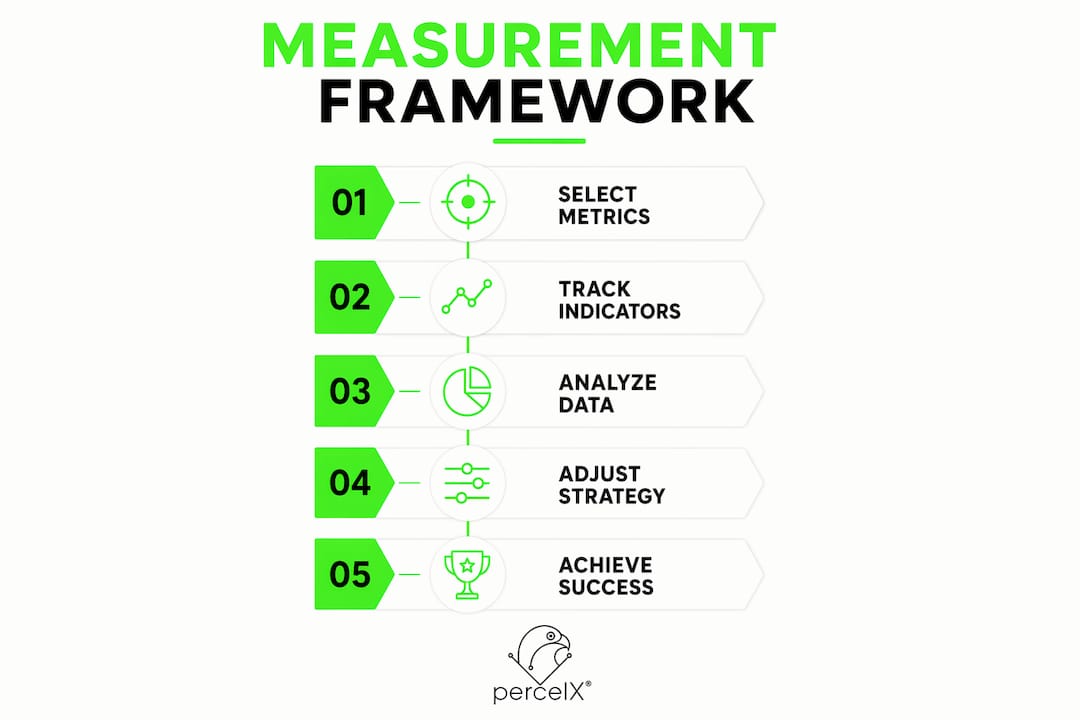
The foundation of measuring organizational transformation is choosing the right categories of metrics before the initiative launches. Three categories matter most: leading indicators, operational metrics, and lagging financial indicators.
Leading indicators signal early momentum. Operational metrics confirm process-level change. Financial indicators confirm business impact, but they arrive months later. Waiting for financial results before adjusting your approach is one of the most common and costly mistakes in change management.

The table below organizes the most validated metrics by category:
| Category | Metric | What it tells you |
|---|---|---|
| Leading | System login rate | Whether people are engaging with the change |
| Leading | Training completion rate | Whether knowledge transfer is happening |
| Operational | Cycle time reduction | Whether processes are actually improving |
| Operational | Error rate | Whether quality is holding after the change |
| Lagging | ROI and payback period | Whether the investment delivered financial return |
| Lagging | Productivity gain | Whether output improved over the long term |
Tracking financial KPIs raises the likelihood of securing future budget by 1.8x. That means measurement is not just a reporting exercise. It is a direct input into organizational credibility and resource allocation.
Pro Tip: Set your success metrics before the initiative starts, not after. Post-hoc measurement almost always gravitates toward the numbers that look good rather than the numbers that matter.
How do leading and lagging indicators complement each other?
Leading and lagging indicators serve different purposes, and organizations that rely on only one type consistently make worse decisions. Leading indicators provide early warnings while lagging indicators confirm outcomes, often with a delay of months.
The timing gap is the critical insight here. Leading indicators predict lagging financial results by 3–9 months. That means if your adoption rate is low in month two, your financial results will reflect that failure in month eight or nine. By then, it is too late to course-correct without significant cost.
Leading indicators to track:
- System login frequency and active usage rates
- Training completion and proficiency scores
- Manager coaching conversation frequency
- Compliance with new processes or workflows
- Employee sentiment scores from pulse surveys
Lagging indicators to track:
- Revenue growth attributable to the change
- Cost reduction from process improvements
- Productivity output per team or department
- Customer satisfaction scores post-implementation
- Net Promoter Score shifts tied to the initiative
Balanced leading-lagging measurement prevents premature shutdowns and enables proactive management. Organizations that declare success too early, based on lagging data alone, often watch gains erode within 12 months because the behavioral change was never fully embedded.
Pro Tip: Build a weekly scorecard that includes at least two leading indicators. Review it every Monday before your leadership meeting. This habit alone will surface problems 60–90 days before they show up in your financial reports.
Why adoption and behavioral metrics predict transformation outcomes
Adoption rate is the single most predictive metric in any transformation initiative. An adoption rate below 60% at 90 days predicts failure to meet business targets. That threshold is not arbitrary. It reflects the minimum level of behavioral engagement needed for a change to become self-sustaining.
The "adoption gap" is the space between project completion and actual usage. Most leaders close the project when the system goes live or the training ends. The real work, embedding the behavior, has barely started. Most leaders mistakenly prioritize project completion over adoption, which causes failures despite on-time delivery.
Persistence metrics address this directly. A persistence metric measures whether a behavior is still present 30, 60, or 90 days after the initial change event. It distinguishes between a temporary adjustment and a systemic shift. Without persistence data, you cannot know whether your transformation actually changed anything.
The table below shows how adoption thresholds connect to business outcome likelihood:
| Adoption rate at 90 days | Likelihood of meeting business KPIs |
|---|---|
| Below 40% | Very low |
| 40%–59% | Below average |
| 60%–79% | Moderate to high |
| 80% and above | Strongly predictive of success |
Projects meeting adoption behavior thresholds are 3x more likely to meet their business KPIs. That multiplier makes adoption tracking the highest-return measurement activity available to any change leader.
Pro Tip: Track adoption at the individual level, not just the team average. A 70% team adoption rate can hide a critical subgroup at 20% whose resistance will eventually pull the whole initiative backward.
You can find detailed examples of measurable employee behavior change that show how this plays out across real organizational contexts.
How can organizations build effective measurement frameworks?
A measurement framework for assessing organizational change outcomes is not a generic template. It must be built from your organization's own historical data. Internal correlation models improve measurement accuracy by connecting adoption thresholds to business KPIs specific to your context.
The steps below outline how to build a framework that actually works:
- Define your critical actions. Identify the 3–5 specific behaviors that, if adopted consistently, will drive the business outcome you want. These become your leading indicator targets.
- Set adoption thresholds. Use historical project data to determine what adoption rate correlates with success in your organization. The 60% threshold is a starting benchmark, not a universal rule.
- Build a minimal scorecard. Minimal scorecards with adoption, proficiency, friction, and value KPIs allow efficient weekly decision-making without overwhelming your team with data.
- Incorporate manager metrics. Manager conversation frequency and coaching quality are among the strongest predictors of sustained adoption. Track them explicitly.
- Review and recalibrate monthly. Frameworks that are set once and never updated become irrelevant within a quarter. Build recalibration into the process.
Outcome-based change management increases success rates by up to 70%. That figure reflects the difference between organizations that measure what happened and those that measure what changed. The distinction sounds subtle. The results are not.
Measurement is a strategic capability, not an administrative task. Organizations measuring compliance and performance show 3.16x higher success rates than those that do not. That gap is wide enough to determine whether a transformation initiative survives or gets quietly shelved.
Leaders who want to go deeper on team-level measurement approaches will find that the framework principles above apply at both the individual and collective level.
Key Takeaways
Organizations that measure transformation success through adoption, behavioral, and financial metrics consistently outperform those that track project completion alone.
| Point | Details |
|---|---|
| Adoption rate is the top predictor | An adoption rate below 60% at 90 days predicts failure to meet business targets. |
| Leading indicators come first | Leading indicators signal problems 3–9 months before lagging financial data confirms them. |
| Persistence metrics confirm real change | Tracking behavior at 30, 60, and 90 days separates systemic change from temporary compliance. |
| Internal frameworks outperform generic ones | Building correlation models from your own historical data sets realistic, accurate thresholds. |
| Measurement drives resource decisions | Organizations that track financial KPIs are 1.8x more likely to secure future transformation budget. |
What most leaders get wrong about measuring transformation
The most common mistake I see is treating measurement as a reporting obligation rather than a decision-making tool. Leaders collect data, compile it into a slide deck, and present it upward. Nothing changes based on what the data says. That is not measurement. That is documentation.
Real measurement changes what you do next week. If your adoption rate drops below threshold in week six, you reallocate coaching resources immediately. You do not wait for the quarterly review. The organizations I have seen sustain transformation over multiple years all share one habit: they review leading indicators weekly and act on them within days, not months.
The other mistake is declaring success at go-live. A system launch is not a transformation. A behavior change that persists under pressure is a transformation. Leaders who conflate the two end up defending initiatives that look successful on paper while watching performance quietly erode.
Balanced measurement, combining early signals with confirmed outcomes, is the only way to know whether your change is real or just recent.
— Percell
Percelx and the behavioral intelligence behind transformation measurement
Measuring transformation without behavioral data is like tracking fitness without a heart rate monitor. You can see the surface, but you miss what drives the result.
Percelx is built for exactly this gap. The platform uses a 360° behavioral assessment approach to surface the hidden patterns that affect decision-making, adoption, and leadership performance. For organizational leaders, that means you get a clear picture of where behavioral alignment exists and where resistance is forming, before it shows up in your lagging metrics. Percelx holds a 4.9-star satisfaction rating and delivers customized measurement plans that connect individual behavior to team-level outcomes. If you are serious about tracking transformation results with precision, the Percelx platform gives you the behavioral intelligence to do it. You can also explore the full Percelx platform to see how behavioral data integrates with your existing change management process.
FAQ
What is the most important metric for transformation success?
Adoption rate at 90 days is the strongest single predictor. An adoption rate below 60% at that point reliably predicts failure to meet business targets.
How do leading and lagging indicators differ in change management?
Leading indicators, such as system logins and training completion, signal early momentum. Lagging indicators, such as ROI and productivity gains, confirm outcomes but arrive 3–9 months later.
Why do transformations fail even when projects finish on time?
Most failures stem from the adoption gap. Project completion and actual behavioral adoption are different events, and leaders who measure only delivery miss whether the change was ever truly embedded.
How often should organizations review transformation metrics?
Weekly review of leading indicators is the standard for high-performing change programs. Monthly recalibration of the full framework keeps thresholds accurate as the initiative matures.
What role do managers play in transformation measurement?
Manager coaching frequency and conversation quality are among the strongest predictors of sustained adoption. Tracking these metrics explicitly is a core component of any effective measurement framework.