

Measurable employee transformation is defined as a specific, observable, and quantifiable shift in employee behavior, skills, or performance that demonstrably improves business outcomes. This is not about training completion rates or attendance logs. The field now recognizes a sharper standard: if behavior does not change, development has not occurred. For HR professionals and organizational leaders, the examples of measurable employee transformation covered here span engagement, retention, learning adoption, and leadership, each backed by data you can benchmark against your own workforce.
1. What makes a good example of measurable employee transformation?
Strong examples of measurable workforce development share one defining trait: they track behavioral outcomes, not activity completions. Finishing a course does not equal growth. Behavioral change must be observable and tied to role performance before it counts as transformation.
The most reliable employee performance indicators include:
- Time-to-competency: How quickly a new or transitioning employee reaches full productivity in a role
- Internal mobility rate: The percentage of open roles filled by existing employees rather than external hires
- Retention at 6 and 12 months: Whether employees stay through critical tenure milestones, which signals genuine engagement
- Development plan adoption rate: The share of employees actively working a growth plan versus those who received one and ignored it
- Skill proficiency lift: Pre and post assessment scores that confirm a measurable capability increase
One distinction that HR leaders frequently blur is the difference between a growth plan and a performance improvement plan (PIP). Growth plans focus on potential, not underperformance. Conflating the two destroys psychological safety and kills the conditions transformation requires.
Pro Tip: Before launching any transformation initiative, define your baseline metric for each indicator above. Without a baseline, you cannot prove change occurred.
2. UK transport sector: engagement scores doubled profits
One of the most cited employee transformation case studies in the coaching literature comes from a UK transport company that rebuilt its entire performance management model around frontline coaching. The results were not incremental. Over four years, engagement scores rose from 41 to 64, staff turnover and absence halved, and operating profits doubled.
What drove this outcome was not a new HR software platform. It was a sustained shift in how managers interacted with frontline workers daily. Coaching replaced directive management. Feedback became continuous rather than annual. The transformation was measurable at every stage because the organization tracked engagement scores, absence rates, and financial performance in parallel.
"The lesson from this case is not that coaching works in theory. It is that coaching, applied consistently over time and measured rigorously, produces compounding returns that show up on the income statement."
This example is particularly useful for leaders in operations-heavy industries where frontline engagement is often treated as a soft metric. The UK transport case proves it is a hard one.
3. AI-powered culture systems: 60-point eNPS gains in 90 days
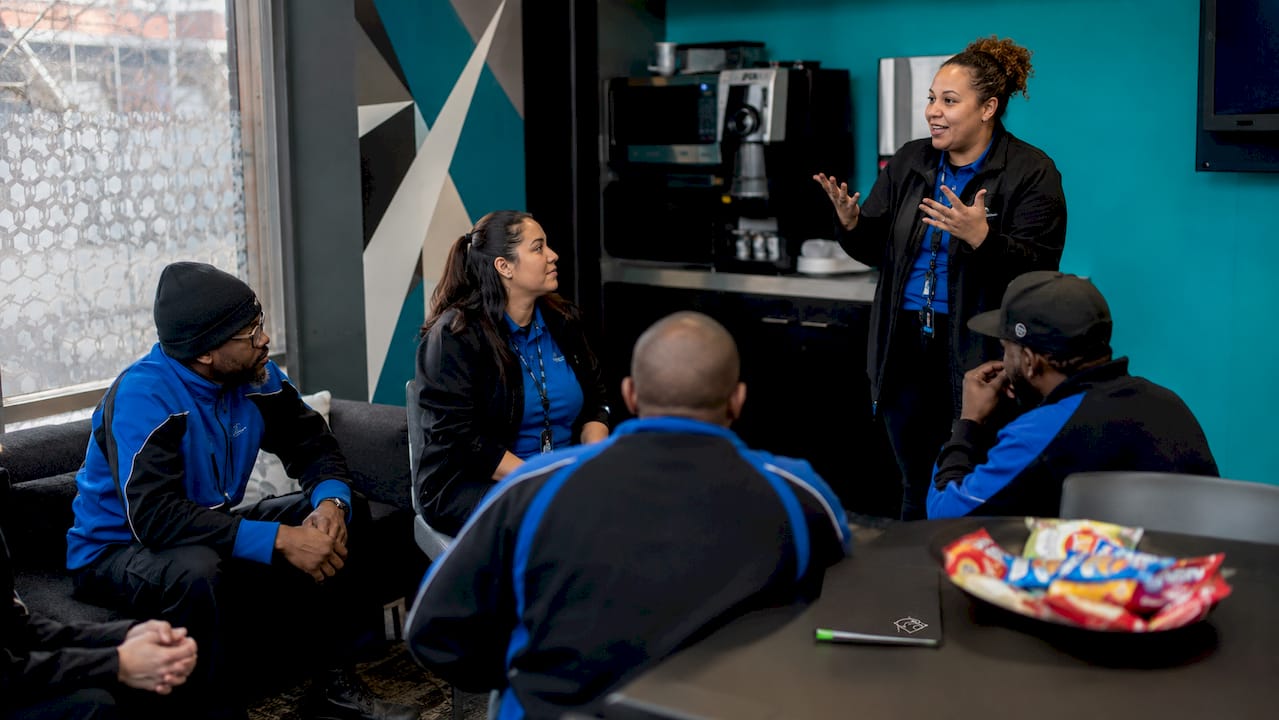
The second category of workforce development examples involves AI-powered real-time culture platforms. Organizations using these systems report 25–40% voluntary attrition reduction and a 60-point average increase in employee Net Promoter Scores within 90 days. That speed of impact is what separates real-time culture tools from traditional annual survey cycles.
The mechanism is continuous behavioral measurement. Instead of waiting for a quarterly pulse survey, these platforms surface friction points as they emerge. Managers receive nudges to act before disengagement becomes resignation. The transformation is not a one-time event. It is engineered into daily work routines through automated feedback loops and peer accountability structures.
For HR leaders evaluating this approach, the key question is whether your current measurement cadence is fast enough to catch behavioral drift before it becomes a retention problem. If your last engagement data is more than 60 days old, it probably is not.
4. Financial institution learning hub: 5x learning hours, 85% adoption
Yoma Bank implemented an AI-powered personalized learning hub and achieved a 5x increase in learning hours per employee, an 80% increase in training reach across branches, and over 85% platform adoption. Those numbers matter because adoption rate is the metric most learning programs fail on first.
The personalization layer was the differentiator. Employees received learning paths calibrated to their role, tenure, and skill gaps rather than a generic catalog. That alignment between individual need and content delivery is what drove adoption above the 85% threshold. Most enterprise learning platforms see adoption rates well below 50% in the first year.
This example belongs in any conversation about how to measure employee success in learning and development contexts. The metric is not hours completed. It is whether the learning changed what employees do on the job.
5. Personality-based coaching: 97% engagement in a digital marketing team
A digital marketing team facing leadership dysfunction used the Birkman Method, a behavioral assessment tool, to rebuild team dynamics through personality-based coaching. The outcome was a 97% sustainable engagement rating, 17 points above the high-tech industry benchmark.
The Birkman Method works by mapping each team member's behavioral patterns, stress responses, and motivational needs. Coaches then design interactions and accountability structures around those patterns rather than applying a uniform leadership model. The result is that conflict decreases not because people are told to get along, but because the team's operating model accounts for how each person actually functions under pressure.
This is one of the clearest examples of behavioral transformation in leadership development. The 97% figure is meaningful because it was sustained, not a post-workshop spike that faded within weeks.
6. How to measure and track employee transformation
Tracking strategies for employee transformation require a layered measurement model. No single metric tells the full story. The table below maps the most reliable indicators to what each one actually reveals:
| Metric | What it measures | Review cadence |
|---|---|---|
| Time-to-competency | Speed of role readiness after hire or transition | At 30, 60, and 90 days |
| Internal mobility rate | Depth of talent pipeline and growth culture | Quarterly |
| Retention at 6 and 12 months | Whether development is sustaining engagement | At each milestone |
| Skill proficiency lift | Actual capability change, not training attendance | Pre and post assessment |
| Development plan adoption | Whether growth plans are active or dormant | Monthly |
| eNPS or engagement score | Sentiment alignment with organizational direction | Monthly or real-time |
Key transformation metrics like time-to-competency, internal mobility, and retention at 6 and 12 months are the clearest signals of whether transformation is real. If those numbers do not move, the program is not working regardless of how many training hours were logged.
Continuous measurement outperforms periodic reviews in every documented case. Annual reviews catch problems after they have already cost you people. Monthly or real-time tracking gives you the window to intervene.
Pro Tip: Build your transformation dashboard before your program launches. Retroactively trying to gather baseline data after a program starts produces unreliable comparisons and weakens your business case.
7. Comparing transformation types: which approach fits your context?
Not every transformation strategy fits every organizational context. The right approach depends on what you are trying to change and who you are trying to change it for.
Workflow-embedded development vs. standalone training
Embedding behavioral science and nudges into daily workflow produces sustained change. Standalone training events are ineffective alone. Siemens applied this principle across 20,000 leaders by integrating development into management routines rather than scheduling it as a separate activity. The contrast is stark: a two-day leadership workshop produces a knowledge transfer. A 90-day embedded coaching program produces a behavior change.
Engagement-driven vs. skills-focused transformation
Engagement-driven programs, like the UK transport case, target the emotional and relational conditions that make performance possible. Skills-focused programs, like the Yoma Bank learning hub, target capability gaps directly. Both are valid. The choice depends on your diagnostic. If your retention data shows people leaving managers rather than roles, start with engagement. If your performance data shows skill gaps blocking promotion, start with learning.
Behavioral coaching vs. traditional goal setting
Traditional goal setting tells employees what to achieve. Behavioral coaching, as demonstrated by the Birkman Method case, addresses how people operate under pressure and why they default to certain patterns. For leadership development specifically, coaching leadership skills through behavioral assessment produces more durable results than SMART goal frameworks alone.
The practical filter for choosing between these approaches:
- Use engagement-driven programs when eNPS or pulse scores are below industry benchmarks
- Use skills-focused programs when promotion rates or internal mobility are stagnant
- Use behavioral coaching when leadership effectiveness scores are low despite goal completion
8. The business case for measurable employee growth
The financial argument for measurable employee transformation is direct. Organizations with strong development planning see 59% lower voluntary turnover, 17% higher productivity, and 21% higher profitability. Those are not soft outcomes. They show up in operating margins and headcount costs.
The implication is that development planning is a financial lever, not an HR program. When you frame transformation metrics in terms of turnover cost reduction and productivity gain, the conversation with the CFO changes. A 59% reduction in voluntary turnover at an organization with 500 employees and a $15,000 average replacement cost represents millions in recoverable expense.
Connecting transformation metrics to daily workflow and individual growth is what converts a development initiative into a business result. Without that connection, you have a program. With it, you have a performance system.
Key takeaways
Measurable employee transformation requires behavioral evidence, continuous tracking, and alignment between individual growth plans and business performance indicators.
| Point | Details |
|---|---|
| Behavior over activity | Track observable capability changes, not training completions, to confirm real transformation. |
| Continuous measurement wins | Real-time or monthly tracking catches disengagement before it becomes turnover. |
| Match method to diagnosis | Use engagement programs for retention issues and skills programs for capability gaps. |
| Growth plans differ from PIPs | Development plans must focus on potential, not underperformance, to maintain psychological safety. |
| Business case is financial | Strong development programs produce 59% lower turnover and 21% higher profitability. |
What I have learned about transformation that most programs get wrong
After working with dozens of organizations on workforce performance, the pattern I see most often is this: leaders invest in transformation programs and then measure the wrong thing. They count completions. They track hours. They report participation rates. None of those numbers tell you whether anyone changed.
The UK transport case and the Birkman Method case share a common structure. Both started with a diagnostic that revealed the actual behavioral gap. Both built measurement into the program from day one. Both tracked outcomes that connected to business performance, not just HR metrics. That sequence is not accidental. It is the architecture of transformation that lasts.
The warning I give every HR leader I work with is this: do not confuse a growth plan with a performance improvement plan. The moment an employee suspects their development plan is actually a managed exit, psychological safety collapses and transformation becomes impossible. Growth plans must be forward-facing, tied to potential, and owned by the employee, not administered by HR.
AI and behavioral science have changed what is possible in 2026. Real-time culture platforms, personality-based assessments, and personalized learning hubs can now deliver what annual reviews never could: continuous, individualized, measurable development. But the technology only works if the measurement model is right. Build the metrics first. Then build the program.
— Percell
How Percelx drives measurable behavior transformation
Percelx is built specifically for the gap most transformation programs leave open: the space between assessment and sustained behavior change. The Percelx Behavioral Intelligence API integrates directly into your organizational workflow, delivering continuous behavioral measurement rather than periodic snapshots.
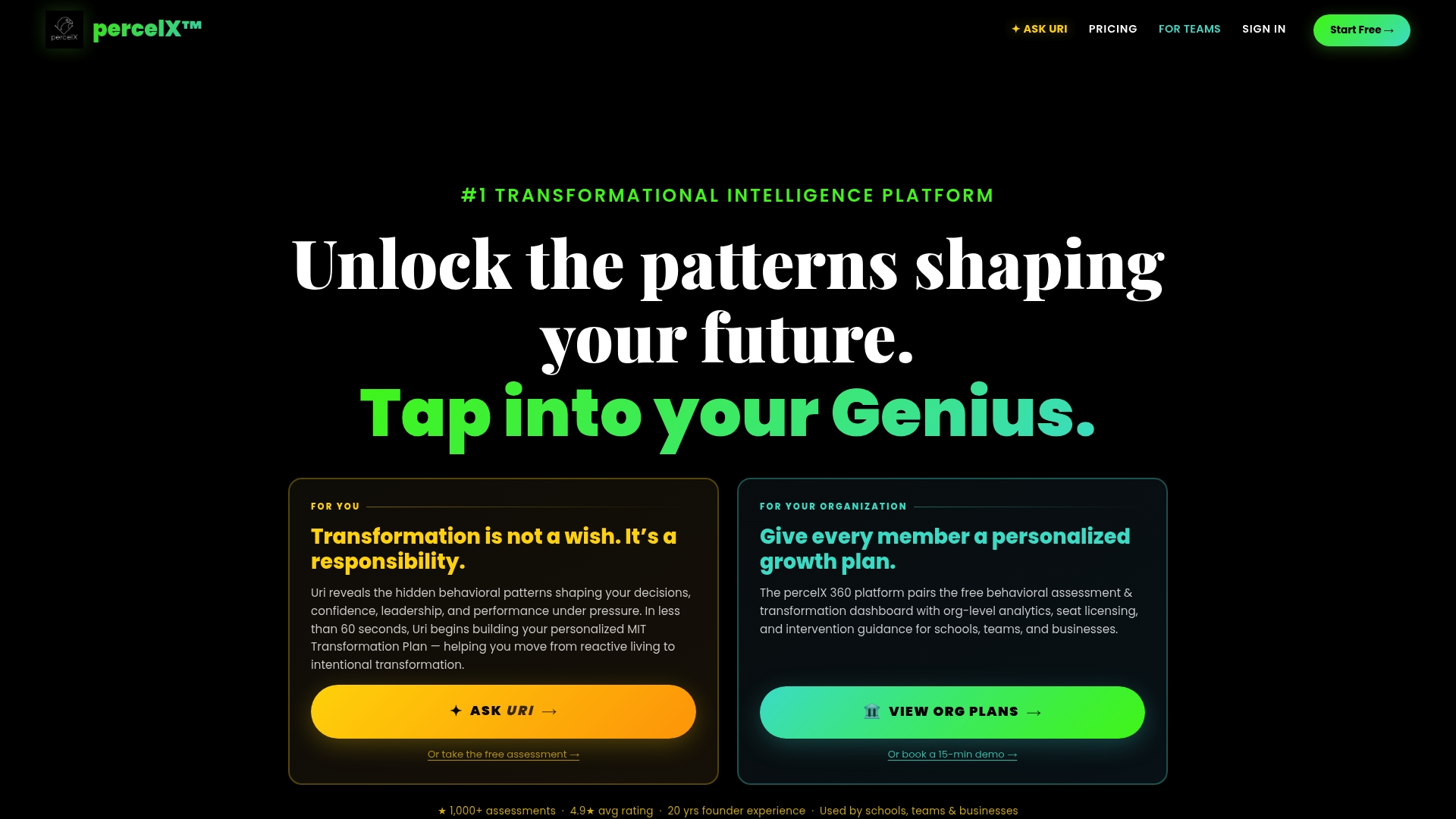
Percelx uses a 360° assessment model to surface the hidden behavioral patterns that affect decision-making, leadership effectiveness, and team performance. The platform then generates customized transformation plans instantly, with real-time feedback and coaching support built in. For HR leaders who want to move from activity tracking to genuine performance transformation, Percelx for teams provides the measurement infrastructure to prove it is working. With a 4.9-star satisfaction rating, the results speak for themselves.
FAQ
What are the best metrics for measuring employee transformation?
The most reliable metrics are time-to-competency, internal mobility rate, and retention at 6 and 12 months. If those indicators do not improve, the transformation program is not producing real behavioral change.
How is a growth plan different from a performance improvement plan?
A growth plan focuses on an employee's potential and future capability, while a performance improvement plan addresses current underperformance. Conflating the two destroys the psychological safety that transformation requires.
How quickly can measurable transformation results appear?
AI-powered culture platforms have documented 60-point eNPS increases within 90 days. Engagement-driven coaching programs like the UK transport case produced compounding results over four years, showing that speed depends on the depth of change targeted.
What is the ROI of investing in employee development?
Organizations with strong development programs report 59% lower voluntary turnover, 17% higher productivity, and 21% higher profitability. These outcomes make development planning a direct financial lever, not a discretionary HR expense.
Should transformation be embedded in daily work or run as separate training?
Embedding development into daily workflows through nudges, peer accountability, and real-time feedback produces sustained behavioral change. Standalone training events, without reinforcement structures, do not produce lasting transformation on their own.