

Professional identity transformation is defined as the deliberate, nonlinear process of reconstructing your professional self-concept by internalizing new beliefs, values, and behaviors. It goes far beyond updating a resume or switching job titles. According to the 2026 Annual Review of Organizational Psychology, this process involves a rupture or reconfiguration of self-definition that unfolds over many months, especially for high performers. Understanding what is professional identity transformation gives you a framework for navigating career disruptions, pursuing authentic growth, and building a professional life that reflects who you are becoming, not just who you have been.
What is professional identity transformation and why does it matter?
Professional identity transformation is the process through which you fundamentally reshape how you define yourself at work. It is not a single decision or a weekend workshop. It is a sustained shift in the beliefs, values, and behaviors that form your professional self-concept.
Competence alone does not sustain professional identity. When market forces, technology, or organizational change disrupt your role, identity threat can arise even when your skills remain fully valid. That gap between "I am still capable" and "I no longer know who I am professionally" is exactly where transformation begins.

Why does this matter for your career? Because professionals who understand professional identity evolution can navigate transitions with intention rather than panic. They move from reactive to deliberate. They build careers that hold up under pressure because the foundation is identity, not just a job description.
Herminia Ibarra, one of the most cited researchers on career reinvention, argues that acting into a new identity is more effective than reflecting your way into one. That single insight separates people who successfully transform from those who stay stuck in analysis.
What does professional identity transformation involve?
The psychological process behind professional identity change is more complex than most career guides acknowledge. Three core elements define the experience: identity dissolution, liminality, and narrative reconstruction.
Identity dissolution
Identity dissolution is the loss of your prior professional self-concept. It feels like grief, and for good reason. When a role, title, or career path that defined you for years disappears or no longer fits, the psychological impact is real. The 2026 Annual Review of Organizational Psychology confirms this rupture hits high performers hardest, because their sense of self is most tightly fused with professional achievement.
The liminal space
After dissolution comes the liminal phase. This is the "messy middle" where you are no longer who you were but not yet who you are becoming. Research confirms that this in-between phase is normal and necessary for authentic transformation. It is not a sign of failure. It is the sign that real change is underway.
Common experiences during liminality include:
- Imposter syndrome when trying on new roles or titles
- Grief for the expertise and status you are leaving behind
- Uncertainty about which direction to commit to
- A pull back toward old, comfortable patterns of work
"The liminal phase is not a waiting room. It is the laboratory where your next professional identity gets built." This reframe matters because most professionals try to escape discomfort rather than work within it.
Narrative reconstruction
The third element is narrative reconstruction. This means building a coherent story about who you are professionally across every touchpoint: your resume, your LinkedIn profile, your networking conversations, and your own internal self-talk. Bridget Batson's Identity Anchor concept stresses that a single consistent narrative across all brand touchpoints is what makes a career pivot believable to the market.
Pro Tip: Write a one-paragraph professional narrative before you update any platform. That narrative becomes the filter for every career decision and communication you make during transformation.
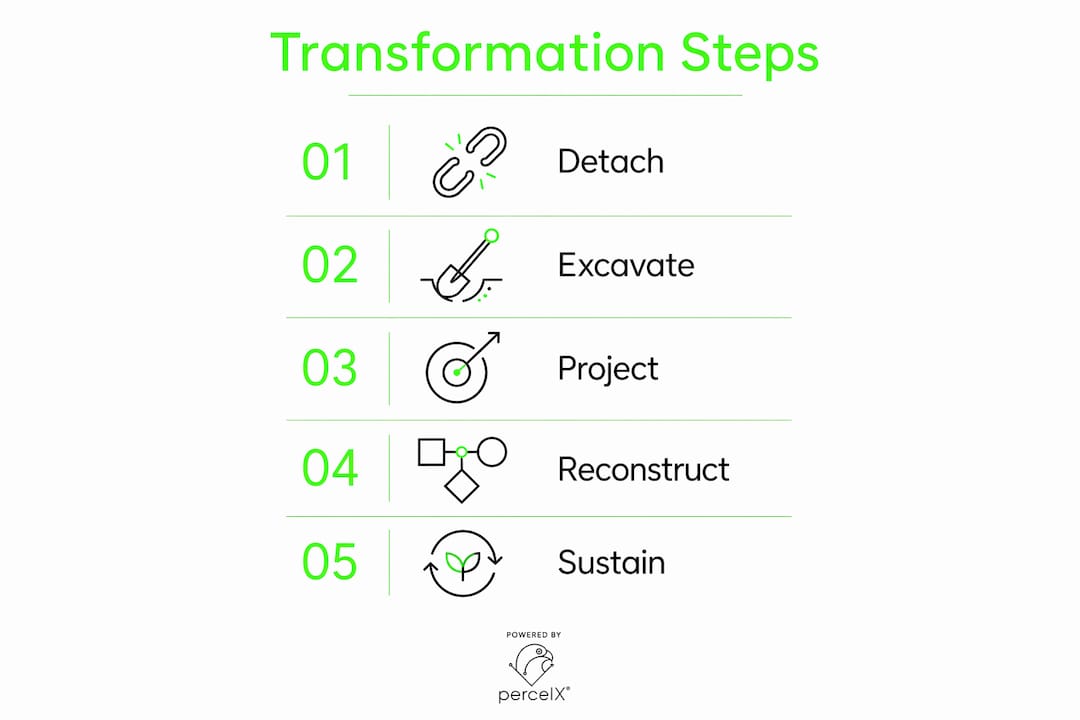
How to transform professional identity: the Detach, Excavate, Project model
A structured framework makes professional identity change far more manageable. The Career Identity Reset model, designed for mid-career professionals, breaks the process into three stages: Detach, Excavate, and Project.
-
Detach. Separate who you are from your previous role or title. This is harder than it sounds. If you spent fifteen years as a finance director, "finance director" is not just a job. It is part of your identity. Detaching means acknowledging that your value as a person and professional is not housed in that title. You are the capabilities, values, and judgment behind the role, not the role itself.
-
Excavate. Dig beneath your job descriptions to uncover your core capabilities. Ask: What problems do I solve that no job description fully captures? What do colleagues consistently come to me for? What work energizes me regardless of the title attached to it? This stage often reveals transferable strengths that open doors across industries. The Career Identity Reset framework was specifically designed to shift focus from job title to problem-solving capacity.
-
Project. Design your next career chapter from your new identity foundation. This is where repositioning, layering, and pivoting strategies come into play. Repositioning means presenting existing skills in a new context. Layering means adding new capabilities to your existing base. Pivoting means moving into a fundamentally different domain using transferable strengths as your entry point.
The sequence matters. Most professionals skip straight to Project, updating their LinkedIn before they have done the Detach and Excavate work. The result is a polished profile built on a shaky identity foundation. Start with identity, then build the external signals.
Pro Tip: Use the professional growth assessment framework to map your excavated capabilities before you write a single word of your new professional narrative.
Research from 2025 and 2026 in medical and educational fields confirms that internalizing core professional values is what distinguishes technicians from leaders. The same principle applies across every industry. Values internalization is the engine of the Project stage.
Common challenges in professional identity transformation
Even with a clear framework, the path is rarely smooth. Knowing the most common pitfalls in advance gives you a real advantage.
-
Mastery relapse. This is the tendency to revert to old areas of expertise when vulnerability or self-doubt spikes. Mastery relapse is often triggered by external pressure or internal imposter syndrome. It feels safe to retreat to what you know. But every retreat reinforces the old identity and delays the new one.
-
Incoherent narrative. Updating your resume without updating your LinkedIn, your elevator pitch, and your networking conversations creates a fragmented signal. The market reads inconsistency as uncertainty. Relying on a resume alone for a career pivot is one of the most common reasons pivots fail.
-
Thinking instead of acting. Reflection is valuable, but you cannot think your way into a new professional identity. Herminia Ibarra's research is clear: acting into the new identity through experimentation and new experiences is what makes transformation real. Waiting until you feel ready is a trap.
-
Impatience with the timeline. Professional identity evolution takes months, not weeks. Expecting a fast transition sets you up for discouragement during the liminal phase.
Pro Tip: Conduct a brand audit every 90 days during your transformation. Check that your LinkedIn headline, summary, resume, and verbal pitch all tell the same story. Misalignment is the first sign of a stalling pivot.
Shifting from a "Role-Identity" to an "Archetype-Identity" is one of the most effective ways to build resilience. An archetype is broader than a title. "The Strategist," "The Builder," or "The Connector" can apply across industries and roles. That flexibility is what makes professionals adaptable when markets shift.
Practical steps to intentionally transform your professional identity
Knowing the theory is not enough. Here is how to put professional identity transformation into practice with specific, repeatable actions.
Audit your current professional brand. Review every signal the market receives from you: LinkedIn profile, resume, portfolio, email signature, and how you introduce yourself in conversation. Note where the story is consistent and where it breaks down.
Build a consistent narrative. Write a clear, concise professional story that connects your past, present, and future. This story should answer three questions: What have I done? What do I bring? Where am I going? Use this narrative as the template for every platform and conversation.
Experiment actively. Take on projects, volunteer roles, or side work that lets you practice your emerging identity. Herminia Ibarra calls this "acting into" the new self. The experience builds both competence and confidence in the new direction.
Use platforms strategically. LinkedIn is the most visible professional identity signal most people control. Update your headline to reflect your emerging identity, not your last title. Use the About section to tell your narrative story, not list your job history.
| Action | Tool or Platform | Frequency |
|---|---|---|
| Brand audit | LinkedIn, resume, pitch | Every 90 days |
| Narrative update | LinkedIn About, bio | After each major shift |
| Identity experimentation | Projects, volunteer work | Ongoing |
| Narrative validation | Networking conversations | Weekly |
| Coaching or assessment | Percelx 360° assessment | At key transition points |
Leverage leadership potential frameworks to understand how organizations read identity signals. Knowing what decision-makers look for helps you align your transformation with real market expectations.
Professional coaching or structured assessment accelerates the process significantly. The values in governance research from 2026 confirms that professionals who anchor their identity in clearly articulated values navigate digital transformation and AI disruption with far greater resilience than those who anchor only in skills.
Key takeaways
Professional identity transformation is a deliberate, nonlinear process that requires identity work before external brand signals, consistent narrative across all platforms, and action-based experimentation to make the new self real.
| Point | Details |
|---|---|
| Identity before brand signals | Define your new professional self before updating LinkedIn, resumes, or pitches. |
| Liminal phases are normal | The "messy middle" between identities is a necessary stage, not a sign of failure. |
| Act into the new identity | Experimentation and new projects build identity faster than reflection alone. |
| Narrative coherence is critical | Consistent messaging across all touchpoints is what makes a career pivot credible. |
| Mastery relapse is a real risk | Retreating to old expertise during doubt delays identity consolidation and must be managed. |
What I have learned about professional identity transformation
The most common mistake I see professionals make is treating identity transformation as a branding project. They update their LinkedIn headline, rewrite their resume, and wonder why nothing changes. The external signals are the last step, not the first.
The work that actually moves the needle is internal. It is the uncomfortable process of sitting with the question: "Who am I when I strip away the title?" Most people avoid that question because the honest answer is uncertain. But uncertainty is not the enemy here. It is the material you work with.
I have also noticed that the professionals who transform most successfully are not the ones who plan the most. They are the ones who act the most. They take the project outside their comfort zone. They say yes to the conversation that feels premature. They introduce themselves with the new title before they feel fully qualified to own it. That willingness to act before certainty is what Herminia Ibarra's research captures, and it is what I see play out in real careers consistently.
AI and digital transformation are accelerating the need for this work. When technology can replicate a skill set, the professionals who thrive are those whose identity is built on values, judgment, and adaptability rather than a specific technical function. That is not a threat. It is an invitation to do the deeper identity work that most people have been putting off.
Be patient with the timeline. Be impatient with inaction.
— Percell
How Percelx supports your transformation
Your professional identity transformation deserves more than generic advice. Percelx is built to reveal the hidden behavioral patterns that shape your decisions, leadership style, and performance, giving you a clear picture of where you are and a personalized plan for where you are going.
The Percelx Behavioral Intelligence Platform delivers a 360° assessment that identifies the gaps between your current behavioral patterns and the identity you are building. With a 4.9-star satisfaction rating, Percelx provides the kind of specific, personalized feedback that turns transformation from a vague intention into a measurable process. Whether you are navigating a career pivot, stepping into leadership, or redesigning your professional brand, explore the Percelx 360° assessment tools to start with clarity and move forward with confidence.
FAQ
What is professional identity transformation in simple terms?
Professional identity transformation is the process of fundamentally changing how you define yourself at work by internalizing new values, beliefs, and behaviors. It goes beyond changing jobs to changing the core story you tell about who you are professionally.
How long does professional identity transformation take?
The 2026 Annual Review of Organizational Psychology confirms this is a nonlinear process that typically unfolds over many months. There is no fixed timeline, but consistent action and narrative coherence accelerate the process significantly.
What is the biggest mistake people make during a career pivot?
Relying on a resume update alone without building a consistent narrative across LinkedIn, networking conversations, and other brand touchpoints is the most common failure point. Bridget Batson's Identity Anchor research shows that ecosystem coherence is what makes a pivot credible to the market.
Why is professional identity important beyond job titles?
Professional identity anchored in values and capabilities rather than titles makes you resilient when roles change, industries shift, or technology disrupts your function. Research from 2025 and 2026 confirms that values internalization distinguishes adaptable leaders from those who struggle when their role definition is disrupted.
What is mastery relapse and how do I avoid it?
Mastery relapse is the tendency to revert to old areas of expertise when self-doubt spikes during a transition. You avoid it by recognizing the pull toward old patterns as a normal response to vulnerability, then deliberately choosing actions that reinforce your emerging identity instead of retreating to your comfort zone.