

Intentional leadership development is the deliberate process of building leader capabilities through structured learning, applied practice, and ongoing reinforcement that aligns a leader's actions with organizational vision and values. This is the industry term for what many call "purposeful leader growth," and it stands apart from passive management training or one-time workshops. The role of intentional leadership development goes far beyond filling skill gaps. It produces measurable shifts in behavior, team alignment, and organizational performance. Research shows that structured leadership programs reduced employee turnover by 29 percentage points over three years. That number reflects what happens when development is designed with intention, not improvisation.
What are the key components of intentional leadership development?
Effective intentional leadership development does not start with a training catalog. It starts with a formal needs analysis that maps the gap between current leader behavior and the outcomes the organization needs. Without that foundation, even expensive programs produce little lasting change. Program design quality, not budget size, determines whether a leadership program works or fails.
The most effective programs combine four elements in sequence:
- Formal instruction that builds conceptual understanding of leadership models and frameworks.
- Spaced practice that distributes learning over time rather than compressing it into a single event.
- On-the-job application that puts new skills directly into real work situations with real stakes.
- Social reinforcement through peer feedback, manager coaching, and communities of practice.
Training alone yields knowledge gains, but sustained behavior change requires all four elements working together. A leader who attends a two-day workshop and returns to an unchanged environment will revert to old patterns within weeks.
Measurement is the final and most overlooked component. Behavior change assessments such as 360-degree feedback or manager evaluations, conducted several months after training, give the clearest picture of whether development actually transferred. Reaction scores collected immediately after a session tell you almost nothing about long-term impact.

Pro Tip: Schedule a 90-day behavior check-in after every leadership development program. Pair it with a structured conversation between the leader and their manager to review specific behavioral shifts, not general impressions.
How does intentional leadership development impact organizational outcomes?
The organizational case for intentional leadership practices is built on evidence, not aspiration. Improved leader communication and early issue resolution are the two mechanisms most directly linked to the 29-point turnover reduction cited above. When leaders communicate expectations clearly and address problems before they escalate, employees stay longer and perform better.
Clear performance expectations from managers directly correlate with employee satisfaction, retention, and performance. That connection is not accidental. Leaders who have been developed intentionally know how to set expectations, give coaching, and create the conditions where people feel their work matters.
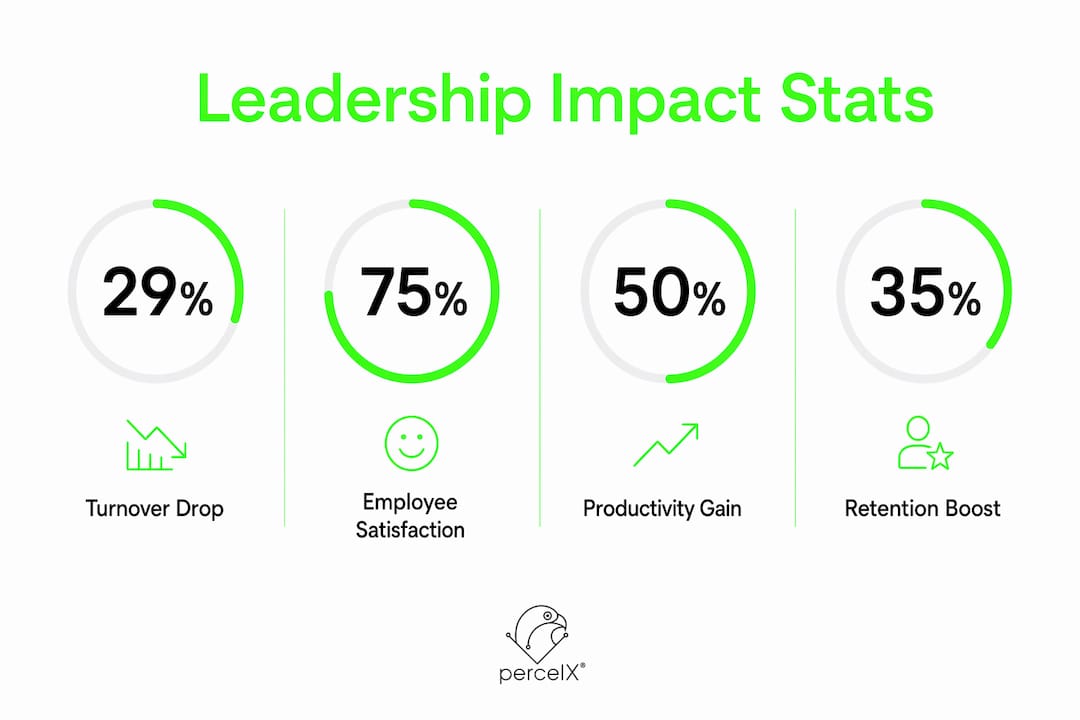
The table below shows the primary organizational outcomes linked to intentional leadership development and the mechanisms behind each:
| Outcome | Driving mechanism |
|---|---|
| Reduced employee turnover | Stronger leader communication and early conflict resolution |
| Higher employee engagement | Leaders who set clear expectations and provide consistent coaching |
| Better team alignment | Shared understanding of vision and values across the leadership layer |
| Faster decision-making | Leaders with practiced frameworks for evaluating options under pressure |
| Lower operational cost | Fewer management errors, less rework, and reduced undermanagement |
Strong intentional leadership builds cultures where employees feel valued and believe their work matters. That cultural shift is what drives engagement scores up and exit interview rates down. You can see the difference in teams led by intentional leaders within a single quarter.
What challenges do leaders face in practicing intentional leadership?
The most common failure mode in leadership is becoming reactive. Leaders get pulled into urgent requests, back-to-back meetings, and operational fires until their day is entirely consumed by what is loud rather than what is important. Maintaining an internal compass is the critical discipline that separates intentional leaders from those who are simply busy.
A practical tool for recalibration is the leadership compass check, a brief internal audit that asks three questions:
- What was my stated leadership intention this week?
- What did I actually spend my time and attention on?
- Where is the gap, and what caused it?
Running this audit weekly prevents the slow drift from purposeful leadership into reactive management. The transition to intentional leadership starts with self-awareness, internal compass assessment, and relationship mastery. Without regular self-assessment, even well-trained leaders lose their footing under pressure.
Conflict management is a second major challenge. Leaders who avoid conflict allow misalignment to compound until it becomes a team-wide problem. The Thomas-Kilmann Conflict Mode Instrument offers a practical framework for this. It maps five response modes, from competing to accommodating, and helps leaders choose the right approach based on the situation. Collaboration requires both assertiveness and cooperation, while compromise becomes the right choice when time is constrained and a good-enough resolution is better than a delayed perfect one.
Pro Tip: Use the Thomas-Kilmann framework in your next team retrospective. Ask each leader to identify which conflict mode they defaulted to in the past month and whether it was the right choice for that situation.
How can leaders apply intentional leadership development in everyday practice?
Applying intentional leadership skills in daily work requires structure, not willpower. The most effective approach ties development activities directly to career stage and current role demands. A first-time manager needs different development than a senior director, and a program that ignores that distinction produces generic results.
Structured programs that evolve with career stages and integrate theory with practical application produce the deepest growth. Cross-functional assignments and peer learning broaden perspective in ways that classroom instruction cannot replicate. Here is a practical sequence for building your personal development plan:
- Assess your current behavioral patterns. Use a 360-degree assessment to identify the gap between how you see yourself and how your team and peers experience you.
- Set two or three specific behavior targets. Vague goals like "communicate better" produce vague results. Specific targets like "give structured feedback to each direct report weekly" produce measurable change.
- Attach each target to a real project. Development accelerates when it is practiced in high-stakes situations, not simulated ones.
- Build a peer learning group. A small group of peers who meet monthly to share challenges and observations creates the social reinforcement that makes new behaviors stick.
- Measure behavior change at 90 days. Use manager assessments or 360-degree feedback to verify that your behavior has actually shifted, not just your intentions.
The comparison below shows the difference between passive and intentional approaches to leadership growth:
| Approach | Method | Outcome |
|---|---|---|
| Passive development | Attend workshops when available | Knowledge gain, minimal behavior change |
| Intentional development | Structured plan tied to role demands | Sustained behavior change and measurable results |
| Reactive learning | Address gaps only after problems arise | Delayed growth, higher cost |
| Proactive development | Anticipate capability needs by career stage | Consistent leadership pipeline growth |
Identifying leadership potential early and pairing it with structured development creates a leadership pipeline that does not depend on luck or tenure. Organizations that do this consistently outperform those that promote based on technical skill alone.
Key takeaways
Intentional leadership development produces measurable organizational results when it combines structured needs analysis, applied practice, social reinforcement, and behavior-based measurement.
| Point | Details |
|---|---|
| Design drives outcomes | Program quality, not budget, determines whether leadership development produces lasting behavior change. |
| Turnover drops with better leaders | Organizations using structured programs reduced turnover by 29 percentage points over three years. |
| Reactive leadership is the default | Regular compass checks and self-assessment prevent leaders from losing their intentional focus under pressure. |
| Behavior change takes time to measure | Assess leadership impact through 360-degree feedback several months after training, not immediately after. |
| Career-stage alignment matters | Development plans tied to a leader's current role and career stage produce deeper and faster growth. |
What I've learned about intentional leadership that most programs miss
Most leadership programs teach frameworks and call it development. The real work happens in the gap between knowing a model and actually changing your behavior under pressure. I have seen leaders who could recite every principle of servant leadership and still default to command-and-control the moment a deadline hit. The framework was in their head. The behavior was not in their body.
The leaders who grow fastest are the ones who treat self-assessment as a non-negotiable weekly practice, not a quarterly HR exercise. They check their compass before the week gets loud. They name the gap between their intention and their actual behavior, and they do something specific about it. That discipline is rarer than any certification.
The other thing most programs miss is relationship mastery. You can have perfect clarity on your vision and still fail as a leader if you cannot navigate conflict, build trust across difference, or repair a relationship after a hard conversation. Intentional leadership development that skips this piece produces technically capable leaders who cannot hold a team together when it matters most.
Stay purposeful. The pressure to be reactive never goes away. Your job is to build the habits that make intentional leadership your default, not your aspiration.
— Percell
How Percelx supports your leadership development goals
Leadership development works best when it is grounded in real behavioral data, not self-reported impressions. Percelx uses a 360° assessment approach to reveal the hidden behavioral patterns that shape how you lead, decide, and influence others. That clarity is the starting point for real change.
The Percelx behavioral intelligence platform delivers personalized transformation plans based on your specific behavioral profile, not a generic leadership template. For teams and organizations, the Percelx Enterprise platform scales this approach across leadership layers, giving you a clear picture of where your leadership pipeline is strong and where it needs attention. With a 4.9-star satisfaction rating, Percelx turns assessment data into measurable growth.
FAQ
What is intentional leadership development?
Intentional leadership development is the deliberate, structured process of building leader capabilities through formal training, applied practice, and reinforcement aligned to organizational goals. It differs from passive management training by requiring ongoing behavior measurement and real-world application.
Why does leadership training fail so often?
Leadership training fails when it is delivered as an isolated classroom event without on-the-job application or social reinforcement. Knowledge gained in a workshop does not transfer to behavior without structured follow-through.
How do you measure the effectiveness of a leadership program?
Measure effectiveness through behavior change assessments such as 360-degree feedback or manager evaluations conducted several months after training. Immediate reaction scores do not predict whether learning transferred to actual leadership behavior.
How does intentional leadership reduce employee turnover?
Organizations with structured leadership development programs reduced turnover by 29 percentage points over three years by improving leader communication, early issue resolution, and team alignment. Leaders who set clear expectations and coach consistently create environments where employees choose to stay.
What is the first step to becoming a more intentional leader?
The first step is a self-assessment that maps the gap between your stated leadership intentions and your actual daily behavior. Tools like 360-degree feedback and structured compass checks give you the data you need to make that gap visible and start closing it.