

Motivation is the primary psychological mechanism that connects teamwork to measurable performance and innovation. Without it, even the most detailed transformation plan stalls at the execution stage. The role of motivation in team transformation goes far beyond morale boosters or quarterly incentives. It determines whether your team moves through change with momentum or resistance. Leaders who understand this distinction build teams that adapt, create, and perform at a higher level, consistently.
How does motivation directly influence team performance and creativity?
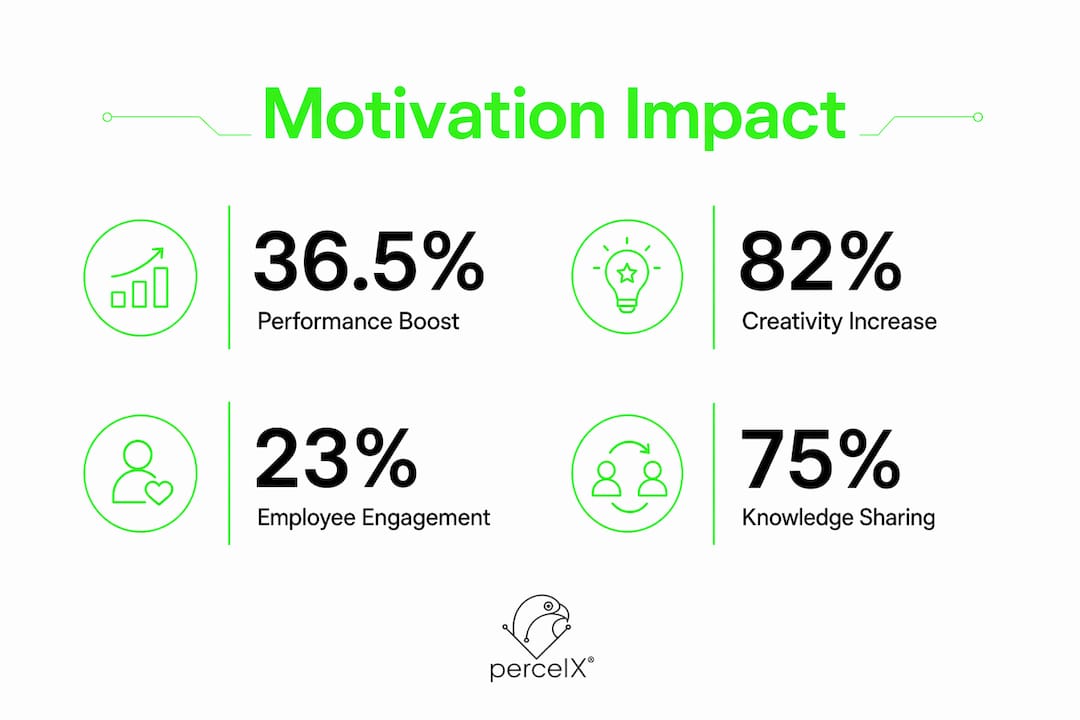
Motivation is not a soft variable. Work motivation acts as the most critical psychological mechanism linking teamwork to employee performance, with a direct effect measured at beta = 0.365 (p < 0.001). That number means motivation alone predicts a statistically significant share of performance outcomes, independent of other factors.
The impact on creativity is even more striking. Combined with emotional intelligence and knowledge sharing, motivation explains up to 76.2% of the variability in team creativity. That is not a marginal contribution. It means that when your team is not generating new ideas, motivation is almost certainly part of the problem.
Knowledge sharing is the specific pathway through which motivation fuels creativity. Research using structural equation modeling with 352 employees in knowledge-based companies found that motivation influences creativity primarily through team knowledge sharing, accounting for 88.5% of the mediated effect. When team members feel motivated, they share what they know. That sharing is what produces innovation.
Emotional intelligence amplifies this process. Leaders who develop their own emotional awareness create environments where knowledge flows freely and motivation stays high. The combination of motivation, knowledge sharing, and emotional intelligence is not theoretical. It is a measurable system you can build.
| Metric | Finding |
|---|---|
| Direct effect on performance | Beta = 0.365, p < 0.001 |
| Creativity variability explained | 76.2% (with emotional intelligence and knowledge sharing) |
| Mediated creativity effect via knowledge sharing | 88.5% |
| Employee engagement rate | 23% globally |
Pro Tip: Map your team's knowledge-sharing habits before launching any transformation initiative. Low sharing frequency is a reliable early signal of motivation problems, not just communication gaps.
What team motivation strategies work best during transformation?
The most effective team motivation strategies share one quality: they remove ambiguity. When team members do not know what is expected or why it matters, motivation collapses. Clarity is the foundation, not a nice-to-have.

Psychological safety is the primary factor differentiating high-performing teams. Google's Project Aristotle identified it as the single most important condition for team performance. Safety enables team members to speak up, take risks, and admit mistakes without fear of punishment. Without it, motivation becomes performative rather than genuine.
Recognition is the most underused tool in a leader's kit. Continuous, specific recognition using the Situation-Behavior-Impact (SBI) formula outperforms quarterly bonuses for long-term motivation. SBI means you name the situation, describe the specific behavior you observed, and explain the impact it had. That specificity makes recognition credible and repeatable.
Autonomy and purpose complete the picture. Teams that own their methods, not just their tasks, show stronger commitment during multi-phase transformations. Purpose alignment connects daily work to a larger goal, which sustains motivation when the change process gets difficult.
Here are the five strategies that consistently produce results:
- Clarity first. Define success criteria before the transformation begins. Ambiguity is the fastest way to drain motivation.
- Build psychological safety. Create explicit norms for speaking up. Reward candor, not just results.
- Use SBI recognition. Replace annual reviews with specific, real-time feedback tied to observable behavior.
- Grant method autonomy. Let team members decide how they achieve goals, not just what the goals are.
- Connect to purpose. Articulate how the transformation serves a mission larger than the project itself.
Pro Tip: Run a brief "motivation audit" at the start of each project phase. Ask each team member one question: "What would make this phase meaningful for you?" The answers will tell you exactly where to focus.
How do individual motivational profiles affect transformation outcomes?
Motivation is not uniform across a team. Leaders must identify individual drivers during project initiation, including technical challenge, career progression, and structure preferences, to prevent disengagement before it starts. Treating every team member the same way is one of the most common and costly mistakes in transformation leadership.
Research confirms that incentive motivation aligned with task difficulty enhances transformation success. High achievement and power motivation produce the best results on difficult tasks. High achievement combined with affiliation motivation suits easier, collaborative tasks better. Mismatching motivation profiles to task types reduces both performance and satisfaction.
The risk of "inactive helpers" is real and measurable. Only 23% of employees are engaged at work globally. Inactive helpers within teams actively reduce performance by consuming resources without contributing momentum. Leaders with a dual-role helper profile, meaning they both support and challenge, can counteract this effect.
| Motivation Profile | Best Task Match | Likely Outcome |
|---|---|---|
| High achievement + high power | Difficult, high-stakes tasks | Strong performance under pressure |
| High achievement + high affiliation | Collaborative, structured tasks | High cohesion and execution quality |
| Low motivation (inactive helper) | Any task type | Reduced team output and engagement |
| Dual-role helper leader | Mixed complexity | Buffers disengagement, raises team floor |
Team cohesiveness adds another layer of nuance. Cohesive teams increase loyalty and productivity, but they can restrict innovation if they become insular. Leaders must balance group unity with the flexibility to challenge norms and accept new ideas.
What leadership practices co-create motivation during transformation?
The most effective leaders do not hand teams a motivation plan. They build one together. BCG research on transformations shows that clarifying the "why" of change while co-creating the "how" with the team drives authentic ownership. That ownership is what separates teams that sustain momentum from those that comply and stall.
Co-creation requires leaders to embrace ambiguity openly. Pretending you have all the answers destroys trust faster than admitting uncertainty. Teams that see their leader navigate ambiguity with confidence learn to do the same.
Visible early wins matter more than most leaders realize. A small, concrete success in the first weeks of a transformation signals to the team that progress is possible. That signal resets motivation levels and builds the psychological runway for harder phases ahead.
Sustained motivation comes from treating it as a continuous leadership system combining clarity, connection, and recognition, not one-time perks or plans. The leaders who get this right check in on motivation as regularly as they check in on deliverables.
Practical behaviors that build co-created motivation include:
- Hold motivation discovery conversations at project kickoff. Ask each person what success looks like for them personally.
- Create safe learning environments. Debrief failures without blame. Focus on what the team learned, not who was responsible.
- Celebrate early wins publicly. Name the specific behavior and its impact in front of the full team.
- Revisit motivation alignment at each phase transition. What motivated the team in phase one may not apply in phase three.
- Model the behavior you want. If you want your team to share knowledge openly, share yours first.
You can track whether these practices are working by measuring transformation progress at defined intervals, not just at the end.
Key Takeaways
Motivation is the single most influential factor in team transformation, and leaders who treat it as a continuous system rather than a one-time event consistently outperform those who rely on plans alone.
| Point | Details |
|---|---|
| Motivation drives measurable performance | A direct effect of beta = 0.365 confirms motivation predicts team performance outcomes. |
| Knowledge sharing is the creativity pathway | 88.5% of motivation's effect on creativity flows through team knowledge sharing. |
| Match motivation profiles to task difficulty | High achievement and power motivation outperform on difficult tasks; affiliation suits collaborative work. |
| Psychological safety enables real motivation | Google's Project Aristotle identifies safety as the top differentiator in high-performing teams. |
| Co-create the "how" with your team | Leaders who clarify the "why" and build the "how" together with teams generate authentic ownership. |
What I've learned about motivation that most leadership frameworks miss
Most transformation frameworks treat motivation as an input. You set the vision, communicate clearly, and assume motivation follows. That assumption fails more often than it succeeds.
What I've seen repeatedly is that motivation is actually an output of the environment you build. When psychological safety is absent, no amount of vision-casting moves a team. When recognition is generic or delayed, it stops functioning as a signal entirely. The teams that sustain momentum through hard transformations are the ones where leaders treat motivation as something they actively maintain, not something they launch.
The other thing most frameworks miss is the individual layer. A team of eight people has eight different motivation profiles. One person is driven by technical challenge. Another needs visible career progression. A third is motivated by belonging and group cohesion. Applying one strategy to all three produces mediocre results at best and active disengagement at worst.
The practical lesson is this: spend the first week of any transformation initiative on motivation discovery, not task planning. You will recover that time many times over when the team hits the difficult middle phase of change. The leaders I've seen succeed at transformation consistently do this. The ones who skip it consistently wonder why their plans are not working.
Motivation is not a soft skill. It is the operating system your transformation runs on. Build it deliberately, maintain it continuously, and personalize it relentlessly.
— Percell
How Percelx supports leaders building motivated, high-performing teams
Percelx is built for leaders who want to move beyond guesswork in understanding what drives their teams. The platform's behavioral intelligence tools reveal the hidden patterns shaping how your team members make decisions, respond to change, and engage with their work.
Percelx uses a 360° assessment approach to deliver personalized transformation plans instantly, giving you a clear picture of each team member's motivational profile. With a satisfaction rating of 4.9 stars, the platform helps leaders identify foundational gaps, align incentives to individual drivers, and track progress over time. If you are leading a transformation and want your motivation strategies grounded in real behavioral data, Percelx gives you the analytical foundation to make that happen.
FAQ
What is the role of motivation in team transformation?
Motivation is the primary psychological mechanism connecting teamwork to performance and creativity. Research shows it directly predicts employee performance (beta = 0.365) and, combined with knowledge sharing and emotional intelligence, explains up to 76.2% of team creativity variability.
How does transformational leadership influence team motivation?
Transformational leadership indirectly drives performance by increasing motivation through clarity, recognition, and purpose alignment. Leaders who co-create the "how" of change with their teams generate stronger ownership and sustained engagement than those who direct from the top down.
What is the SBI formula and why does it matter for team motivation?
SBI stands for Situation-Behavior-Impact. It is a recognition framework where you name the specific situation, describe the observed behavior, and explain its impact. Continuous SBI-based recognition outperforms quarterly bonuses for long-term team motivation.
Why do some team members become inactive helpers during transformation?
Inactive helpers are team members with low motivation who consume resources without contributing momentum. With only 23% of employees globally engaged at work, this pattern is common. Leaders with a dual-role helper profile, both supporting and challenging, can reduce this effect.
How should leaders personalize motivation strategies for their teams?
Leaders should conduct motivation discovery conversations at project kickoff to identify each person's individual drivers, whether technical challenge, career progression, or affiliation. Aligning tasks to those drivers, especially matching incentive motivation to task difficulty, significantly improves transformation outcomes.