

Leadership development frameworks are structured plans organizations use to define leadership competencies, behaviors, and growth stages across every level of management. The types of leadership development frameworks organizations adopt range from career-transition models like the Leadership Pipeline to behavioral systems like Kouzes and Posner's Five Practices of Exemplary Leadership. Choosing the right framework determines whether your leaders grow with intention or simply accumulate years of experience without real progress. The most effective leadership development methods share one trait: they connect specific behaviors to measurable outcomes at each stage of a leader's career.
1. What are the types of leadership development frameworks organizations use?
Leadership development frameworks fall into three broad categories: career-stage models, behavioral practice models, and situational or contingency models. Career-stage models focus on transitions between roles. Behavioral models define specific actions leaders can learn and repeat. Situational models match leadership style to the needs of the people being led.
Each category serves a different organizational need. A company building its first management pipeline needs a career-stage model. A team struggling with inconsistent leadership behavior benefits more from a behavioral framework. Understanding these categories helps you select the right tool before investing time and budget.

2. The Leadership Pipeline model
The Leadership Pipeline model divides leadership growth into six distinct passages, from managing yourself to leading an entire enterprise. Each passage requires a shift in three dimensions: skills, time application, and work values.
| Passage | From Role | To Role | Key Shift |
|---|---|---|---|
| 1 | Individual contributor | First-line manager | Managing others, not just self |
| 2 | First-line manager | Manager of managers | Selecting and coaching managers |
| 3 | Manager of managers | Functional manager | Cross-functional thinking |
| 4 | Functional manager | Business manager | Profit and loss accountability |
| 5 | Business manager | Group manager | Portfolio and capital allocation |
| 6 | Group manager | Enterprise leader | Vision and culture shaping |
What makes this model distinct is its insistence on letting go. A first-line manager who still does individual work instead of managing others has not completed Passage 1. That failure to shift values, not just skills, is the most common cause of pipeline breakdowns.
Pro Tip: When rolling out the Leadership Pipeline, audit each leader's time allocation before training begins. Leaders spending more than 30% of their time on their previous role's tasks are stuck in the wrong passage, and no amount of classroom training fixes that without a direct conversation about work values.
3. How the Hersey-Blanchard Situational Leadership model personalizes development
The Hersey-Blanchard Situational Leadership model matches four leadership styles to four follower development levels based on competence and commitment. The model's core claim is that no single leadership style works for every situation.
| Follower Level | Competence | Commitment | Best Leadership Style |
|---|---|---|---|
| D1 | Low | High | S1: Directing |
| D2 | Some | Low | S2: Coaching |
| D3 | Moderate to high | Variable | S3: Supporting |
| D4 | High | High | S4: Delegating |
The S1 style is high directive and low supportive, suited for new employees who are enthusiastic but inexperienced. S4 is low directive and low supportive, appropriate for seasoned performers who need autonomy. The model's power is that it advocates leader flexibility rather than fixed personality traits, which separates it from contingency models like Fiedler's that treat leadership style as relatively fixed.
Updated versions, including SLII, add structured assessment tools while preserving the original style-to-readiness matching logic. For HR professionals, this means you can use validated diagnostic instruments to place leaders and followers on the matrix before designing training interventions.
4. Kouzes and Posner's Five Practices of Exemplary Leadership
The Five Practices framework defines leadership as a set of learnable behaviors, not a personality type. That distinction matters enormously for organizational leadership strategies because it means any leader can improve with deliberate practice.
The five practices are:
- Model the Way: Leaders clarify their values and set the example through their own actions, not just their words.
- Inspire a Shared Vision: Leaders articulate a compelling future and enlist others in that vision by connecting it to their aspirations.
- Challenge the Process: Leaders seek opportunities to improve, experiment, and take calculated risks, even when it means questioning existing systems.
- Enable Others to Act: Leaders build trust, share power, and develop the competence of those around them.
- Encourage the Heart: Leaders recognize contributions and celebrate team wins to sustain motivation and momentum.
Each practice is observable and measurable. That makes this framework ideal for 360-degree feedback programs and behavioral coaching. Leadership development is most effective when it moves from traits to behaviors leaders can learn and practice repeatedly.
Pro Tip: When using the Five Practices in a development program, pair each practice with a specific behavioral indicator. "Inspire a Shared Vision" is too abstract on its own. Tie it to a concrete action, such as presenting a team goal narrative in every monthly meeting, and you give leaders something they can actually practice and measure.
5. Other leadership development frameworks worth considering
Beyond the three primary models, several other frameworks address specific organizational needs and leadership contexts.
- Transformational leadership: Built around the "4 I's" (Idealized Influence, Inspirational Motivation, Intellectual Stimulation, and Individualized Consideration), this approach aligns well with senior pipeline passages where vision and culture shaping become the primary job. Best for senior leaders driving organizational change.
- Transactional leadership: Focuses on clear expectations, rewards, and consequences. Effective in structured environments where compliance and consistency matter most, such as operations or safety-critical roles.
- Servant leadership: Prioritizes the growth and wellbeing of team members. Useful in knowledge-work environments where retaining top talent depends on leaders who remove obstacles rather than direct tasks.
- Authentic leadership: Centers on self-awareness and values alignment. Works well as a complement to behavioral frameworks because it addresses the internal foundation that drives external behavior.
- Adaptive leadership: Developed by Ronald Heifetz at Harvard, this model distinguishes between technical problems (solvable with existing knowledge) and adaptive challenges (requiring new behaviors and values). Particularly relevant for organizations navigating significant change.
- Emotional intelligence leadership: Grounded in Daniel Goleman's research, this approach treats self-awareness, empathy, and social skills as core leadership competencies that can be developed through deliberate practice.
- Coaching leadership: Leaders act as coaches rather than directors, using questions and feedback to develop others. Pairs naturally with Situational Leadership's S3 supporting style.
Each of these frameworks addresses a different gap. The key is matching the framework to the specific leadership challenge your organization faces right now.
6. How to choose the right framework for your organization
Selecting a leadership development framework requires more than picking the most popular model. A six-criteria evaluation framework helps organizations assess whether a model is theoretically sound, future-oriented, staged, applicable, measurable, and sustainable. Research applying this tool found that only 2 of 12 NHS leadership frameworks met all six criteria. That result shows how rarely organizations apply rigorous standards before committing to a model.
| Evaluation Criterion | What to Look For | Common Gap |
|---|---|---|
| Theoretical rigor | Evidence base and academic grounding | Frameworks built on opinion, not research |
| Future orientation | Prepares leaders for emerging challenges | Models focused only on current role demands |
| Staged development | Addresses multiple career levels | One-size-fits-all programs |
| Applicability | Fits your industry and culture | Generic frameworks misaligned with context |
| Measurability | Includes assessment and feedback tools | No way to track progress |
| Sustainability | Supports ongoing development, not one-time training | Programs that end after a single workshop |
Frameworks that are future-oriented and staged produce more adaptive leaders rather than compliance-focused managers. That distinction matters as organizations face faster change cycles and more complex leadership demands.
For HR professionals, the practical checklist looks like this. First, identify the leadership level you are targeting: individual contributors, mid-level managers, or senior executives. Second, assess your current culture's readiness for behavioral change versus structural change. Third, evaluate whether you need a framework that addresses role transitions, behavioral habits, or situational flexibility. Fourth, confirm the framework includes assessment tools so you can measure progress. Combining a career-stage model like the Leadership Pipeline with a behavioral model like the Five Practices gives you coverage across both role transitions and skill building.
Pro Tip: Do not select a framework based on what worked at a previous employer. Audit your current organization's leadership gaps first. A framework that solved a succession problem at a 500-person company may be the wrong tool for a 50-person team still defining its management structure.
Key takeaways
The most effective organizational leadership strategy combines a career-stage framework for role transitions with a behavioral framework for skill development, evaluated against measurable criteria before adoption.
| Point | Details |
|---|---|
| Match framework to leadership level | Career-stage models suit transitions; behavioral models suit skill building at any level. |
| Apply evaluation criteria | Use the six-criteria tool to assess theoretical rigor, applicability, and sustainability before committing. |
| Prioritize behavioral specificity | Observable behaviors, not personality traits, produce measurable leadership improvement. |
| Combine frameworks deliberately | Pairing the Leadership Pipeline with the Five Practices covers both role transitions and behavioral growth. |
| Assess follower readiness | Situational Leadership requires diagnosing follower competence and commitment before choosing a leadership style. |
What I've learned from watching frameworks succeed and fail
Most organizations pick a leadership framework the same way they pick software: they go with what they've heard of. The Leadership Pipeline is popular, so it gets adopted. The Five Practices has a well-known assessment tool, so it gets purchased. Neither choice is wrong on its own. The problem is that the framework gets implemented without any diagnosis of where the actual leadership gaps are.
I've seen the Leadership Pipeline fail not because the model is flawed, but because no one addressed the work values shift. Leaders completed the training, received their certificates, and went back to doing exactly what they did before. The model requires leaders to genuinely let go of previous role skills. That is a psychological shift, not a knowledge transfer. Without behavioral coaching alongside the structural model, the pipeline becomes a career map that nobody follows.
The Five Practices framework works best when organizations treat it as a living feedback system rather than a one-time program. Leaders who receive quarterly behavioral feedback against the five practices improve measurably. Leaders who attend a two-day workshop and never revisit the material do not. The framework is sound. The implementation discipline is what separates results from wasted budget.
My honest recommendation: start with identifying leadership potential before selecting any framework. You need to know who you are developing and what gaps they carry before you can choose the right model. A framework applied to the wrong person at the wrong career stage produces frustration, not growth.
— Percell
Percelx and behavioral intelligence for leadership growth
Leadership frameworks define the map. Behavioral intelligence tells you where each leader actually stands on it.
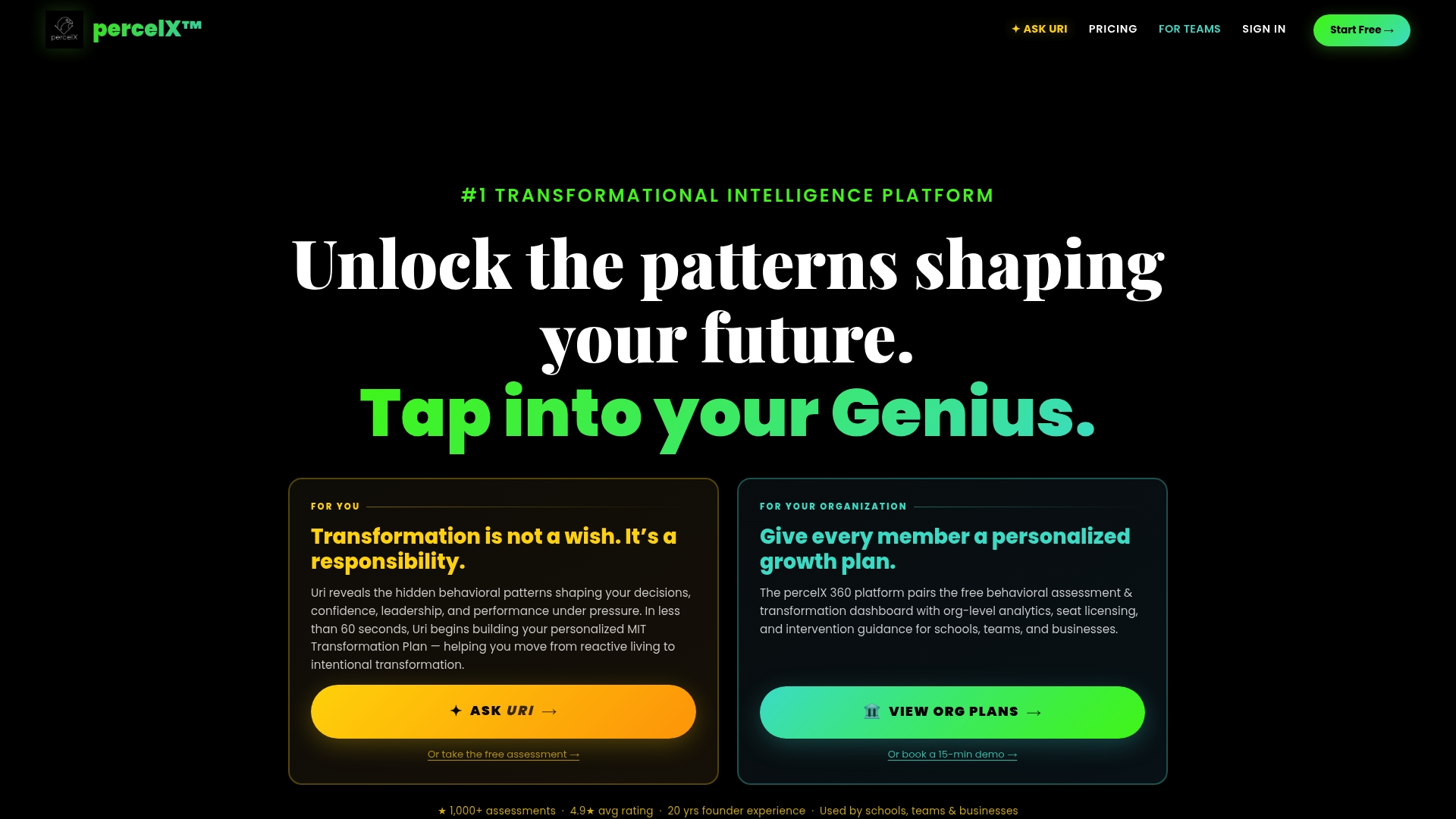
Percelx uses a 360° behavioral assessment approach to reveal the hidden patterns shaping how your leaders make decisions, communicate, and respond under pressure. The behavioral intelligence platform delivers personalized development plans instantly, connecting each leader's behavioral profile to the specific competencies your chosen framework requires. For organizations building or refining their leadership programs, the Percelx developer platform offers API access to integrate behavioral data directly into your existing talent systems. With a 4.9-star satisfaction rating, Percelx gives HR professionals the diagnostic layer that most frameworks leave out.
FAQ
What is a leadership development framework?
A leadership development framework is a structured plan that defines the competencies, behaviors, and growth stages organizations use to build leadership capability at every level.
How does the Leadership Pipeline differ from behavioral frameworks?
The Leadership Pipeline focuses on career-stage transitions and shifts in work values, while behavioral frameworks like the Five Practices define specific observable actions leaders can learn and repeat regardless of role.
Which leadership framework works best for mid-level managers?
The Hersey-Blanchard Situational Leadership model works well for mid-level managers because it teaches them to adapt their style to the development level of each team member rather than applying one approach to everyone.
How many leadership frameworks should an organization use at once?
Most organizations benefit from combining one career-stage model with one behavioral model. Using more than two frameworks simultaneously creates confusion and dilutes focus.
What criteria should HR professionals use to evaluate a leadership framework?
Apply the six-criteria evaluation standard: theoretical rigor, future orientation, staged development, applicability, measurability, and sustainability. A framework that fails on measurability cannot demonstrate return on investment.