

Mental toughness in athletics is defined as the psychological capacity to persist, adapt, and perform consistently under pressure, setbacks, and stress. Research identifies it as the strongest predictor of athletic performance, outranking motivation and stress management in competitive athletes. The industry term for this construct in sports science is psychological resilience under performance demand, though "mental toughness" is the standard working term used by coaches, sport psychologists, and researchers alike. Understanding the role of mental toughness in athletics means recognizing it as a trainable skill, not a fixed personality trait. Athletes who develop it gain a measurable edge in competition, recovery, and long-term career sustainability.
How does mental toughness influence athletic performance?
Mental toughness shapes performance through three core psychological mechanisms: perseverance, emotional regulation, and sustained focus under pressure. These are not abstract qualities. They show up in concrete moments, like a sprinter who resets after a false start, a quarterback who reads the defense clearly in the fourth quarter, or a tennis player who holds serve after losing a set. Each of those responses reflects a trained psychological pattern, not raw willpower.
Research confirms the connection between mental resilience and results. A systematic review of 15 studies covering 4,654 athletes found a statistically significant positive correlation between resilience and athletic performance (r = 0.437). That correlation means athletes with stronger resilience profiles consistently outperform peers with similar physical conditioning.
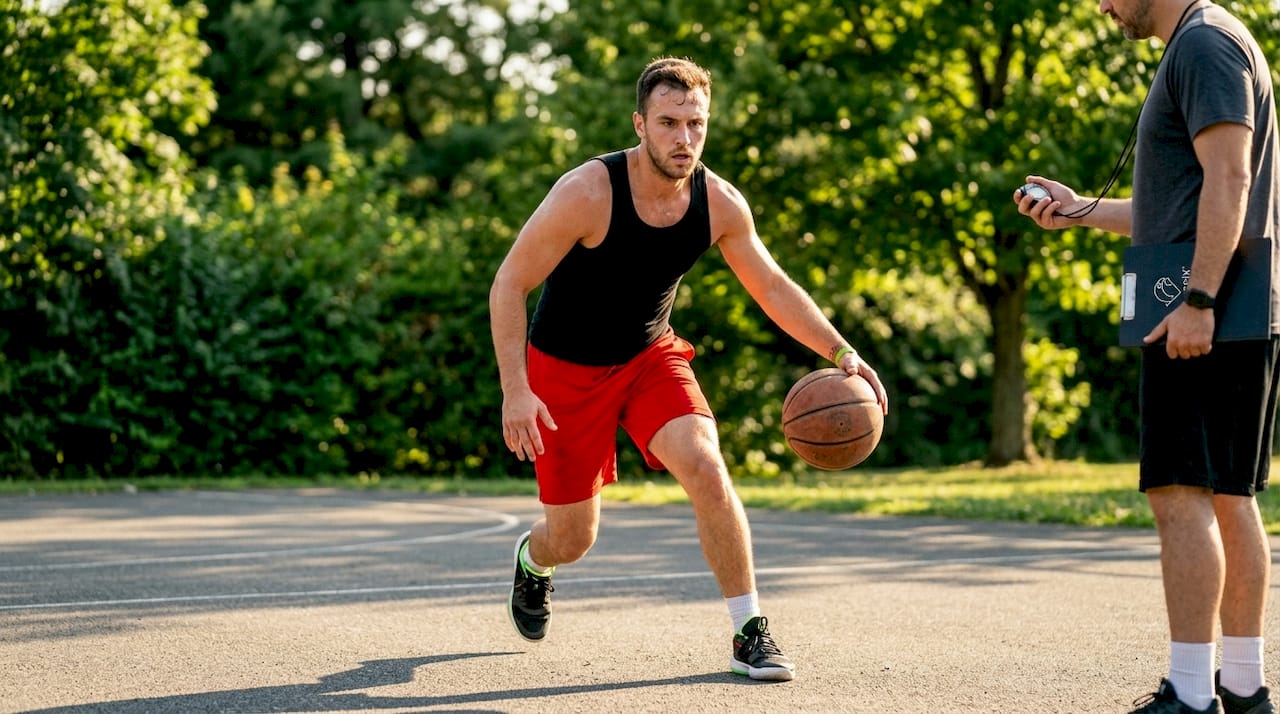
Mental toughness also supports decision-making under pressure, which is one of the most underrated performance factors in team sports. When stress rises, cognitively unprepared athletes narrow their attention and miss tactical cues. Mentally tough athletes maintain broader awareness and execute more accurately in high-stakes moments.
The psychological benefits extend beyond competition:
- Stress coping: Mentally tough athletes maintain motivation and cope with stress more consistently across a full season.
- Emotional regulation: They recover faster from mistakes without losing competitive focus.
- Confidence under adversity: They sustain belief in their preparation even when outcomes are uncertain.
- Adaptive responses: They treat setbacks as information rather than evidence of failure.
"Mental toughness is not about suppressing doubt or fear. It is about continuing to perform effectively while those feelings are present. That distinction separates athletes who grow from adversity from those who are derailed by it."
The behavioral patterns that underpin mental toughness are also measurable. Percelx identifies these patterns through 360° behavioral assessments, giving coaches a concrete baseline to work from rather than relying on subjective observation alone.
What psychological skills training builds mental toughness?
Psychological Skills Intervention (PSI) programs are the evidence-based standard for developing mental toughness in athletes. PSI programs combine goal setting, mental imagery, and emotional regulation into structured training cycles that run parallel to physical conditioning. A randomized controlled study on football players found that structured PSI programs significantly improve both mental toughness and decision-making in young athletes. The gains were not marginal. They were consistent across performance metrics and psychological assessments.
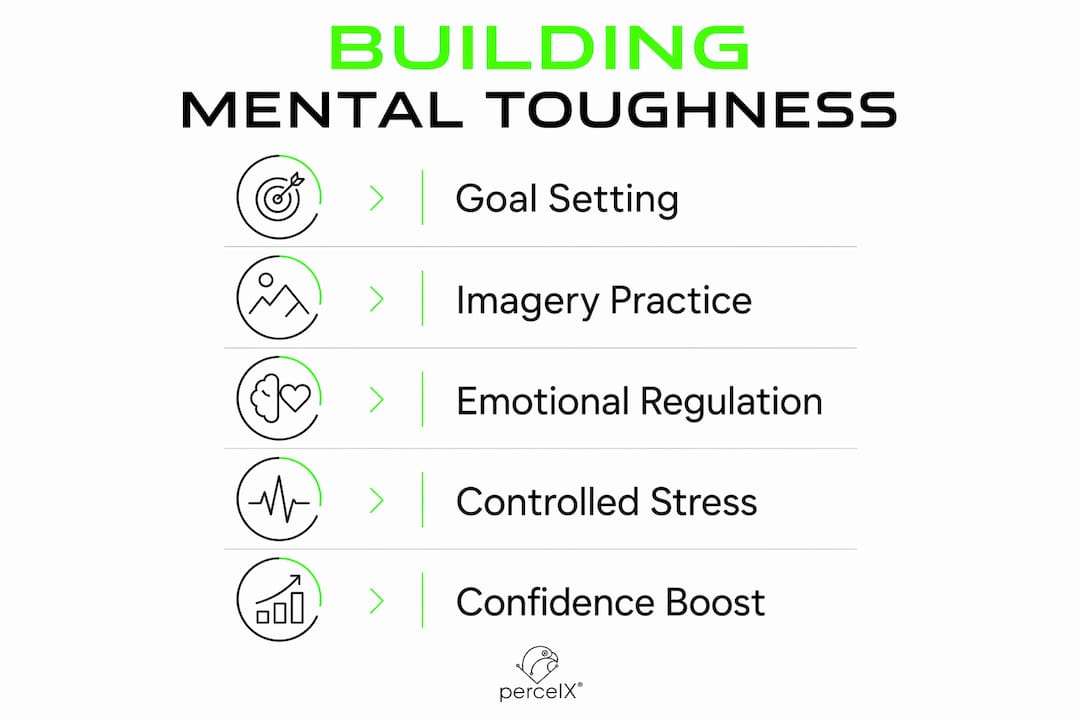
The key word in that finding is "structured." Long-term psychological skills training involving goal setting, imagery, and emotional regulation improves mental toughness more effectively than one-off workshops. A single team session on visualization does not build the neural pathways that hold under competition pressure. Consistent, repeated practice does.
Coaches can integrate PSI into regular training using this sequence:
- Set process goals, not just outcome goals. Ask athletes to define what they control in each session. "I will maintain my breathing pattern in the final 200 meters" is more useful than "I will win."
- Use guided imagery before high-pressure drills. Have athletes visualize successful execution for 3–5 minutes before scrimmages or time trials. This primes confidence and focus.
- Build emotional regulation checkpoints. Teach athletes a reset routine: a breath pattern, a physical cue (like touching a wristband), and a refocus phrase. Practice it in low-stakes settings so it becomes automatic under pressure.
- Debrief on psychological responses, not just physical outcomes. After practice, ask athletes how they managed frustration, distraction, or fatigue. This builds self-awareness over time.
- Track progress with measurable indicators. Use pre-competition anxiety scores, focus ratings, or behavioral observations to monitor mental skills development alongside physical metrics.
Pro Tip: Integrate mental skills practice into the warm-up, not as a separate session. Athletes who practice imagery and self-talk before every training block build the habit faster and transfer it to competition more reliably.
Sport confidence also plays a specific role here. Research shows that confidence mediates mental toughness in female athletes, making confidence-building a priority strategy for coaches working with women's programs. Recognizing that mental toughness development is not one-size-fits-all is the first step toward building it effectively.
What are the biggest misconceptions about mental toughness?
The most damaging misconception in athletic culture is that mental toughness means suppressing emotions or playing through injury without complaint. That belief does not build resilient athletes. It builds athletes who hide pain until it becomes a crisis. Clinicians at Children's Wisconsin have documented that high-performing athletes often mask anxiety and mental health struggles behind strong performance metrics.
Mental toughness is actually defined by psychological flexibility, not rigidity. Psychological flexibility means adjusting to setbacks, reading situations accurately, and choosing the most effective response rather than forcing through every obstacle. A rigid athlete who never admits struggle is not mentally tough. That athlete is a mental health risk.
Common warning signs that mental toughness culture has crossed into harm include:
- Persistent sleep disruption or appetite changes in otherwise healthy athletes
- Withdrawal from teammates or coaches outside of structured practice
- Overidentification of self-worth with performance outcomes
- Resistance to rest or recovery, framed as "mental weakness"
- Emotional flatness or detachment after losses
"Tying your entire identity to athletic success creates psychological fragility, not toughness. When performance dips, athletes with no identity outside sport are at the highest risk for anxiety, depression, and burnout."
Mental toughness acts as an adaptive resource that reduces perceived stress and anxiety. That protective function only works in environments where athletes feel safe enough to communicate honestly. Coaches who create psychological safety, where athletes can report struggles without fear of losing playing time, build teams that are both tougher and healthier.
How to improve mental toughness: strategies for athletes and coaches
Building mental toughness requires a deliberate, phased approach. The goal is controlled exposure to stress, not avoidance of it. Athletes who never practice under simulated pressure conditions do not develop the psychological patterns needed for competition. The following strategies are grounded in sports psychology principles and current research.
- Controlled stress exposure: Design practice scenarios that replicate competition pressure. Scrimmages with score consequences, time-limited drills, and public performance evaluations all build tolerance for high-stakes conditions.
- Mindfulness training: Daily mindfulness practice of 10–15 minutes reduces baseline anxiety and improves attentional control. Athletes who practice mindfulness consistently show better focus recovery after errors.
- Self-talk programming: Replace reactive negative self-talk with pre-planned instructional phrases. "Drive through" replaces "don't fall apart." The language is specific, present-tense, and performance-focused.
- Confidence-building cycles: Structure early-season training so athletes experience frequent, achievable success. Confidence built on real accomplishment transfers to high-pressure situations more reliably than motivational speeches.
- Regular well-being monitoring: Coaches should check in on athlete psychological state weekly, not just after losses. Tracking mental performance progress over time reveals patterns that single-session observations miss.
Pro Tip: Use a simple 1–10 weekly self-rating on focus, confidence, and stress. Athletes who rate themselves consistently below 5 in two or more categories need a direct conversation, not a harder training load.
The table below summarizes the core mental strength training strategies and their primary targets:
| Strategy | Primary target | Best application |
|---|---|---|
| Controlled stress exposure | Pressure tolerance | Pre-competition scrimmages |
| Mindfulness practice | Attentional control | Daily warm-up routine |
| Self-talk programming | Emotional regulation | Drill and competition |
| Confidence-building cycles | Self-efficacy | Early-season training blocks |
| Well-being monitoring | Mental health awareness | Weekly coach check-ins |
Parental and coaching communication that balances toughness expectations with open dialogue is especially critical for youth athletes. Early detection of mental health risks depends on athletes feeling safe enough to speak up.
Key Takeaways
Mental toughness is the single strongest psychological predictor of athletic performance, and it is built through consistent, structured training rather than natural disposition or willpower alone.
| Point | Details |
|---|---|
| Mental toughness predicts performance | Research shows it outranks motivation and stress management as a performance predictor. |
| Resilience correlates with results | A meta-analysis of 4,654 athletes found a significant positive correlation (r = 0.437) between resilience and performance. |
| PSI programs work | Structured psychological skills interventions improve mental toughness and decision-making in competitive athletes. |
| Toughness requires flexibility | Mental toughness means psychological adaptability, not emotional suppression or playing through injury. |
| Monitoring matters | Coaches who track athlete well-being weekly catch mental health risks before they affect performance or safety. |
Balancing mental toughness with athlete well-being
The most important shift I have seen in working with athletes and coaches is this: mental toughness is not a personality type. It is a skill set, and like any skill set, it develops unevenly and requires personalized attention.
Coaches often face a real tension. They want athletes who compete hard and do not fold under pressure. At the same time, they know that pushing too hard on the "toughness" narrative can silence athletes who are genuinely struggling. I have seen programs where the culture of toughness was so strong that athletes hid injuries, masked anxiety, and burned out before their peak years. That is not toughness. That is a system failure.
What actually works is treating mental toughness development the way you treat physical conditioning: progressive, monitored, and individualized. You would not give every athlete the same strength program. The same logic applies to mental skills training. Some athletes need more confidence work. Others need emotional regulation. A few need stress exposure. The coach's job is to know the difference.
Patience is also non-negotiable. Psychological skills take longer to develop than physical ones, and the gains are harder to see in a single practice. Coaches who commit to the process over a full season see the results in competition. Those who abandon it after two weeks because athletes "don't seem more confident yet" are measuring the wrong thing at the wrong time.
— Percell
How Percelx supports mental toughness development
Athletes and coaches who want to move beyond guesswork in mental performance need a system that reveals what is actually happening beneath the surface.

Percelx's Behavioral Intelligence Platform uses a 360° assessment approach to identify the hidden behavioral patterns that shape how athletes respond to pressure, setbacks, and high-stakes competition. The platform delivers personalized development plans based on real psychological data, not assumptions. Coaches gain a clear picture of each athlete's mental performance baseline and can track progress over time with structured assessments. For teams and programs ready to build mental resilience at scale, the Percelx developer tools offer advanced integration options for tracking behavioral intelligence across full rosters. Percelx holds a 4.9-star satisfaction rating, reflecting the measurable results athletes and coaches see when behavioral data drives development decisions.
FAQ
What is mental toughness in athletics?
Mental toughness in athletics is the psychological ability to persist, regulate emotions, and perform consistently under pressure and adversity. Research identifies it as the strongest predictor of athletic performance, above motivation and stress management.
How does mental toughness differ from mental health?
Mental toughness is a performance skill involving resilience and focus. Mental health refers to overall psychological well-being. High mental toughness does not guarantee good mental health, and athletes can score high on toughness measures while struggling with anxiety or depression.
Can mental toughness be trained?
Yes. Structured Psychological Skills Intervention programs that include goal setting, imagery, and emotional regulation have been shown to significantly improve mental toughness in competitive athletes through consistent, long-term practice.
What are the signs that mental toughness culture is causing harm?
Warning signs include athletes hiding injuries, emotional withdrawal, overidentifying self-worth with performance, and resistance to rest. These patterns indicate that toughness expectations have crossed into psychological risk territory.
How can coaches measure mental toughness progress?
Coaches can use weekly self-rating scales on focus, confidence, and stress, combined with behavioral observation during high-pressure drills. Platforms like Percelx provide structured behavioral assessments that track psychological performance patterns over time.