

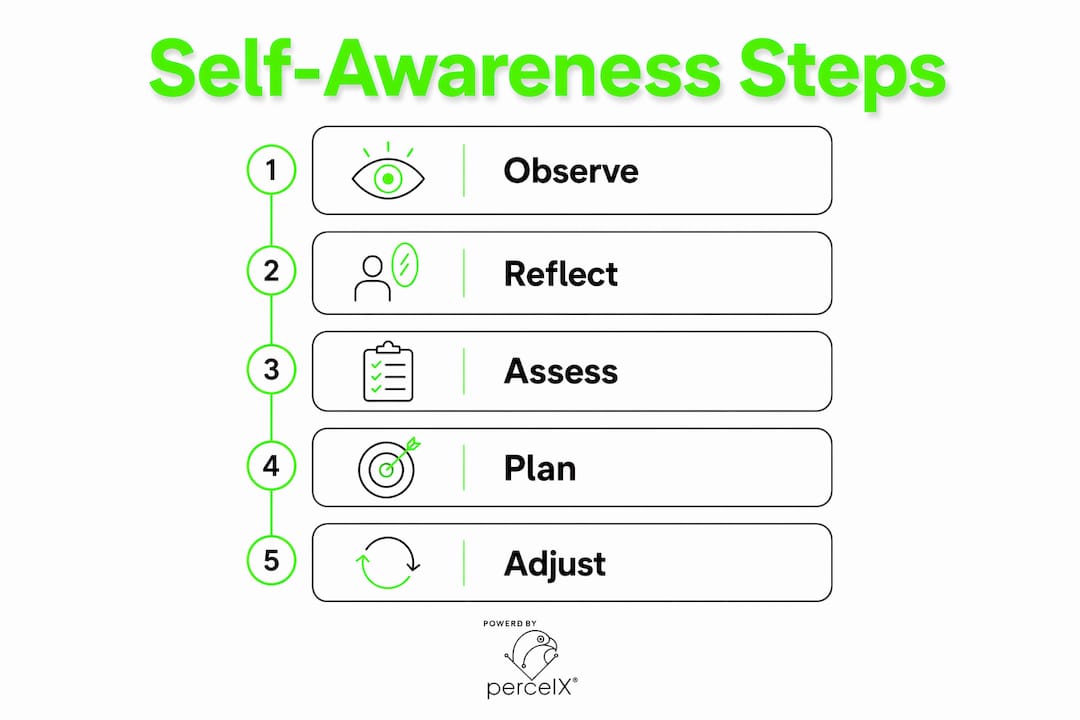
Self-awareness in sport is your capacity to recognize and understand your own thoughts, emotions, behaviors, strengths, and weaknesses during training and competition. It is the foundation beneath every mental skill you develop, and research on mental toughness in competitive athletes confirms that self-insight, the clearest form of self-awareness, is the strongest predictor of mental toughness across confidence, constancy, and control. Without it, you are reacting. With it, you are deciding.
The role of self-awareness in sport reaches further than most athletes expect:
- Mental toughness: Self-insight directly predicts your ability to stay composed, confident, and consistent under competitive pressure.
- Emotional regulation: Recognizing your internal states lets you manage anxiety, frustration, and overconfidence before they cost you.
- Decision-making: Knowing your strengths and limitations shapes smarter game plans and in-competition choices.
- Injury prevention: Athletes who notice early warning signs in their body and behavior adjust before small problems become serious ones.
- Coaching effectiveness: Coaches with strong self-awareness model the reflective habits they want their athletes to build.
Self-awareness is not a personality trait you either have or lack. It is a skill, and it is trainable.
What self-awareness actually looks like in an athletic context
Most athletes think of self-awareness as a vague sense of knowing yourself. In sport psychology, it is far more specific than that. The field distinguishes between two components: self-reflection, which is the process of turning your attention inward, and self-insight, which is the clear, accurate understanding that results from that reflection. You can reflect constantly and still miss the point. Self-insight is what actually drives change.
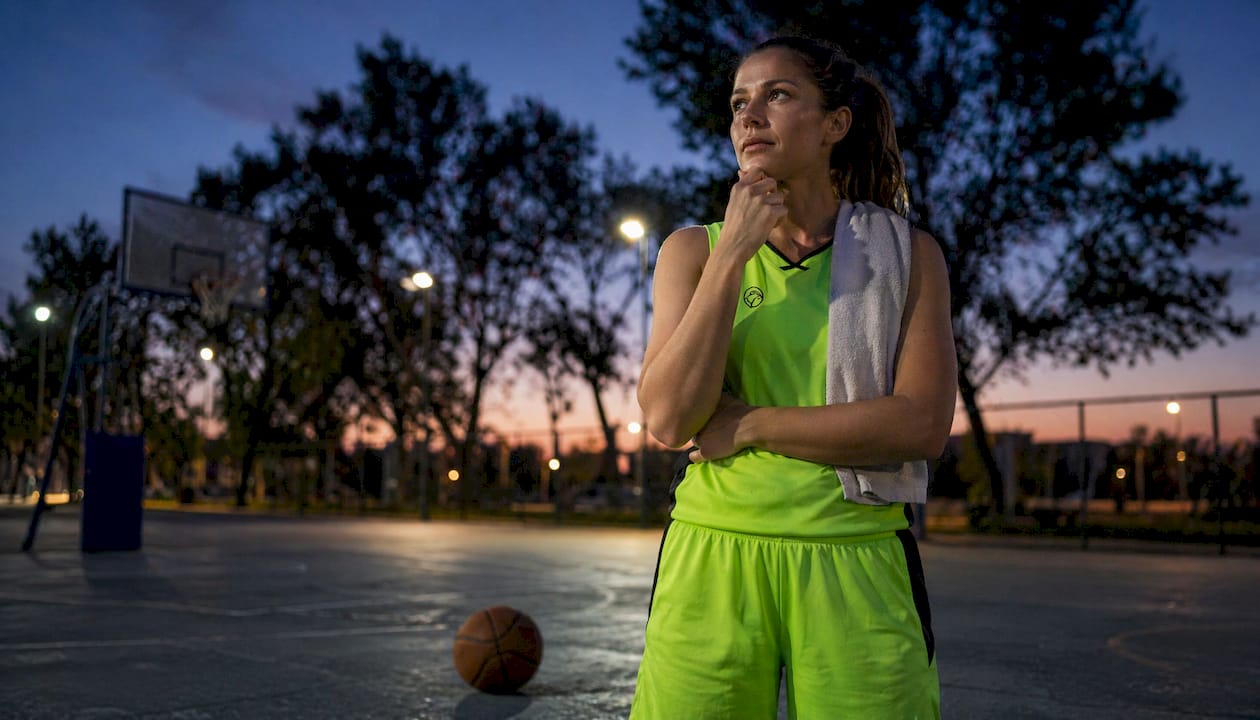
Self-awareness in sport is also not a fixed state. Research on attentional shifts describes it as a dynamic, shifting process. You cannot focus inward and outward simultaneously with equal precision, which is why athletes sometimes "choke" under pressure. Turning attention inward during an automatic motor skill, like a free throw or a golf swing, can disrupt the very mechanics you have spent years automating. Understanding this helps you train attention placement, not just self-reflection.
The cognitive and emotional dimensions of self-awareness work together. Cognitively, you are tracking your decision patterns, tactical tendencies, and skill gaps. Emotionally, you are reading your internal states and understanding how they shape your behavior on the field or court. Both layers matter, and both can be developed.
Younger and less experienced athletes face a particular challenge here. Without guided development, athletes who are unaware of their internal states miss the cues needed for positive change, increasing their risk of burnout, performance decline, and strained relationships with coaches and teammates. The barriers are real:
- Ego protection: Admitting a weakness feels threatening, especially in competitive environments.
- Lack of feedback structures: Many training environments do not build in regular, honest reflection.
- Overconfidence or underconfidence: Both distort accurate self-assessment.
- Attention bias: Athletes often focus on outcomes rather than the behavioral patterns driving them.
- Limited vocabulary: Young athletes may lack the language to describe what they are experiencing internally.
Pro Tip: When working with younger athletes, start with behavioral observation rather than emotional labeling. Ask "What did you notice about your body before that play?" before asking "How did you feel?" Concrete, physical cues are easier to access and less threatening to explore.
Great athletes use honest self-assessment to build strategic game plans that maximize their strengths and work around their limitations. Steffi Graf running around her backhand to hit inside-out forehands was not a workaround. It was a weapon built from clear self-knowledge.

How self-awareness improves athletic performance and mental toughness
Self-awareness does not improve performance in a general, diffuse way. It works through specific psychological mechanisms, and the research is clear about which ones matter most.
Self-insight, not just self-reflection, is the strongest predictor of mental toughness in competitive athletes, with significant predictive effects on confidence, constancy, and control.
The distinction between self-reflection and self-insight matters here. Reflecting on your performance without arriving at accurate understanding produces rumination, not growth. Self-insight, the kind that gives you a clear picture of your emotional and behavioral patterns, is what actually builds the three pillars of mental toughness:
- Confidence: When you know your strengths accurately, you trust them under pressure rather than second-guessing in critical moments.
- Constancy: Self-aware athletes maintain effort and focus across the full arc of a competition, not just when things are going well.
- Control: Recognizing your emotional triggers lets you regulate thoughts and feelings before they disrupt performance.
Emotional regulation is one of the most direct self-awareness benefits for athletes. An athlete who notices rising anxiety before a big point can apply a breathing technique or a pre-performance routine. An athlete who does not notice it just tightens up and wonders why. The same applies to concentration. When you understand where your attention tends to drift, you can build specific cues to redirect it.
Motivation also responds to self-awareness. Longitudinal research on athlete self-report measures shows that athletes who track their psychological states experience increased extrinsic motivation and confidence over 16 weeks, even though satisfaction may dip early in the process. That initial dip is not a failure signal. It is the friction of honest self-assessment producing behavioral adjustment.
Injury prevention is a less discussed but equally important benefit. Athletes who are tuned in to their physical and emotional states recognize fatigue, compensation patterns, and stress accumulation before they become injuries. This is not passive body awareness. It is an active monitoring habit built through consistent practice. The behavioral patterns affecting performance that lead to overuse injuries are often visible in training data long before the injury occurs, but only to athletes who know what to look for.
Practical strategies for athletes and coaches to develop self-awareness
Developing self-awareness in sports requires deliberate practice across multiple methods. No single technique works for every athlete, but the following approaches have strong support in sport psychology research and applied practice.
Mindfulness and attention training
Mindfulness-based exercises help athletes improve self-awareness by directing attention to breathing and bodily sensations, building present-moment focus. Techniques include:
- Focused breathing: Three to five minutes before practice or competition, directing full attention to breath rhythm.
- Body scan meditation: Systematically moving attention through the body to notice tension, fatigue, or discomfort.
- Guided imagery: Mentally rehearsing performance scenarios while monitoring internal responses.
These practices train the attentional control that makes self-awareness usable under pressure, not just in quiet reflection.
Performance profiling and SWOT analysis
Performance profiling, developed within sport psychology, asks athletes to identify the qualities they believe are most important in their sport and then rate themselves honestly on each. A SWOT analysis applied to athletic performance maps strengths, weaknesses, opportunities, and threats in a structured format that coaches and athletes can work from together. Both tools make self-assessment concrete and discussable rather than vague and avoidable.
Video analysis
that athletes cannot see in real time. Body language, eye movement, and pre-point routines all carry information about anxiety, distraction, and momentum shifts. High-performing athletes audit these behaviors deliberately. Watching yourself during a slump, or just during normal training, surfaces patterns that no amount of internal reflection will catch on its own.Journaling and post-performance reflection
After every practice or competition, spend a few minutes writing in a journal. The questions that produce the most useful self-awareness are specific: Did you follow the game plan? When did your focus drop? What triggered your best and worst moments? This habit builds the reflective capacity that eventually becomes real-time self-monitoring during competition.
Goal setting grounded in self-knowledge
Goals built on honest self-assessment are more motivating and more achievable than goals set to impress a coach or meet external expectations. Setting goals that reflect what you genuinely want, and that account for your actual current level, creates alignment between effort and outcome. That alignment is what sustains training momentum over a full season.
Receiving and using feedback
Feedback from coaches, teammates, and sport psychology consultants is one of the fastest routes to accurate self-knowledge. The catch is that feedback only works when you are willing to hear it without defensiveness. Building a culture where honest feedback is normal, and where athletes actively request it, accelerates self-awareness development across an entire team.
Athlete self-report measures
Structured self-report tools give athletes a consistent framework for tracking psychological states over time. Early use of these measures may temporarily reduce satisfaction and intrinsic motivation as athletes confront gaps between their self-image and their actual patterns. That discomfort is productive. Over time, the data builds a picture that supports real behavioral adjustment.
Pro Tip: Do not just track numbers. After completing any self-report measure, spend five minutes writing what the scores mean to you in the context of your current training. That meaning-making step is what converts data into behavior change.
Addressing common barriers
The most common barriers to developing self-awareness in sports are ego protection, lack of structured reflection time, and absence of skilled support. Coaches can address the first by normalizing honest self-assessment as a performance skill, not a vulnerability. Building reflection time into practice schedules addresses the second. For the third, working with a mental performance coach who can guide meaning-making from self-report data and video analysis makes the difference between tracking and transforming.
What research and expert practice reveal about self-awareness in sport
The evidence base for self-awareness in sport has grown considerably over the past decade, and the findings point in a consistent direction: self-insight is not a soft skill. It is a measurable predictor of performance outcomes.
The most direct evidence comes from research on competitive tennis players, where self-insight predicted global mental toughness and its subcomponents more strongly than self-reflection alone. This finding has practical implications for how coaches structure mental skills training. If the goal is mental toughness, developing self-insight, not just encouraging athletes to reflect more, is the mechanism that produces results.
Expert practitioners add important nuance to this picture. Dr. Jennifer Cumming, a sport psychologist at the University of Birmingham, emphasizes that self-awareness is not innate. It is a skill cultivated through deliberate practice, and without it, athletes face elevated risk of burnout, injury, and interpersonal breakdown. Her work highlights that young athletes especially benefit from guided development rather than being left to develop self-awareness on their own.
The practitioner perspective on self-monitoring data is equally important. Effective self-monitoring requires athletes to engage in meaning-making of their tracked psychological data, not just accumulate numbers. A practitioner's role is to help athletes contextualize what their scores and patterns actually mean for their training readiness and competitive behavior. Without that guided interpretation, data collection produces awareness of metrics rather than awareness of self.
Self-awareness theory also explains one of the most frustrating phenomena in sport: choking under pressure. When an athlete turns attention inward during an automatic skill, the conscious monitoring disrupts the motor program. Training self-awareness means learning when to direct attention inward and when to release it outward, a skill that separates athletes who perform well in practice from those who perform well when it counts.
Key findings from research and expert practice:
- Self-insight predicts mental toughness subcomponents more strongly than self-reflection in competitive athletes.
- Athletes using self-report measures show increased motivation and confidence over 16 weeks, despite early satisfaction dips.
- Guided meaning-making from self-report data is critical for behavior change, not just data collection.
- Video analysis of body language and pre-point routines reveals anxiety and distraction patterns invisible to real-time self-monitoring.
- Burnout, poor relationships, and performance decline are all linked to insufficient self-awareness development.
- Self-awareness training must address attentional placement, not just internal reflection, to avoid performance disruption under pressure.
Percelx applies these principles through its 360° behavioral assessment approach, which maps hidden behavioral patterns affecting decision-making, emotional regulation, and performance alignment. Rather than asking athletes to self-report in isolation, the Percelx system delivers a personalized transformation plan that contextualizes behavioral data into specific development priorities. The result is the kind of self-insight that research identifies as the actual driver of mental toughness, not just a general sense of knowing yourself better.
For coaches and sport professionals, the implication is clear. Self-awareness development belongs in your training program with the same intentionality you bring to physical conditioning. The athletes who build it gain a mental edge that compounds across a career. Those who skip it tend to plateau, burn out, or repeat the same performance mistakes without understanding why. Understanding how self-awareness connects to building mental resilience gives you a practical framework for developing athletes who perform when the pressure is highest.
The importance of self-awareness in athletics extends beyond individual performance. Teams where athletes and coaches share a culture of honest self-assessment communicate better, resolve conflict faster, and adapt to adversity with less friction. Self-awareness is both an individual skill and a team asset.
Unlock your performance potential with Percelx

Your behavioral patterns are already shaping your performance. The question is whether you can see them clearly enough to change them. Percelx delivers a 360° behavioral assessment that reveals the hidden patterns affecting your decision-making, emotional control, and competitive consistency, and then builds a personalized transformation plan around what you actually need.
Athletes and coaches using the Percelx platform report a 4.9-star satisfaction rating, not because the process is comfortable, but because it produces measurable results. You get the self-insight that research identifies as the strongest predictor of mental toughness, delivered through a system built specifically for performance transformation.
Ready to see what your behavioral patterns are telling you? Start your assessment at percelx.org.
Key Takeaways
Self-insight, the clearest form of self-awareness, is the strongest predictor of mental toughness in competitive athletes, outperforming self-reflection alone across confidence, constancy, and control.
| Point | Details |
|---|---|
| Self-insight drives mental toughness | Self-insight predicts confidence, constancy, and control in competitive athletes more strongly than self-reflection. |
| Self-awareness is a trainable skill | It develops through deliberate practice including journaling, video review, mindfulness, and guided feedback. |
| Data requires meaning-making | Athlete self-report measures produce behavior change only when athletes interpret their data with practitioner support. |
| Attention placement matters | Self-awareness training must address when to focus inward versus outward to prevent choking under pressure. |
| Coaches accelerate development | Structured feedback, reflection time, and honest assessment culture help athletes build self-awareness faster. |