

Team-level transformation is defined as the intentional redesign of how a team functions, including its workflows, behaviors, and roles, to achieve measurably better performance. This is the process behind "what is team-level transformation explained" in most leadership and organizational development conversations. Unlike broad organizational change programs, team-level transformation targets the specific behavioral patterns and workflow structures within a single team. Platforms like Percelx, frameworks from BCG, and the AI-Native Transformation Framework each address this process differently, but they share one core principle: lasting change starts at the team level, not the executive level. When you get this right, collaboration sharpens, efficiency rises, and your team stops reacting and starts leading.
What is team-level transformation explained in practice?
Team-level transformation is the structured process of moving a team from its current state to a clearly defined target state through deliberate behavior and workflow changes. It is not a one-time training event. It is a repeatable cycle of diagnosis, design, execution, and reinforcement.
The team transformation process differs from company-wide change in one critical way: it is owned and executed by the team itself. Distributed team-led change aligns transformation closer to domain expertise and real business outcomes. That means your team is not waiting for a central program to hand down instructions. You are redesigning your own work.

Understanding team-level change also means recognizing what it is not. It is not a culture initiative with vague aspirations. It is a technical specification with role-specific behaviors, success metrics, timelines, and failure conditions. That specificity is what makes it executable.
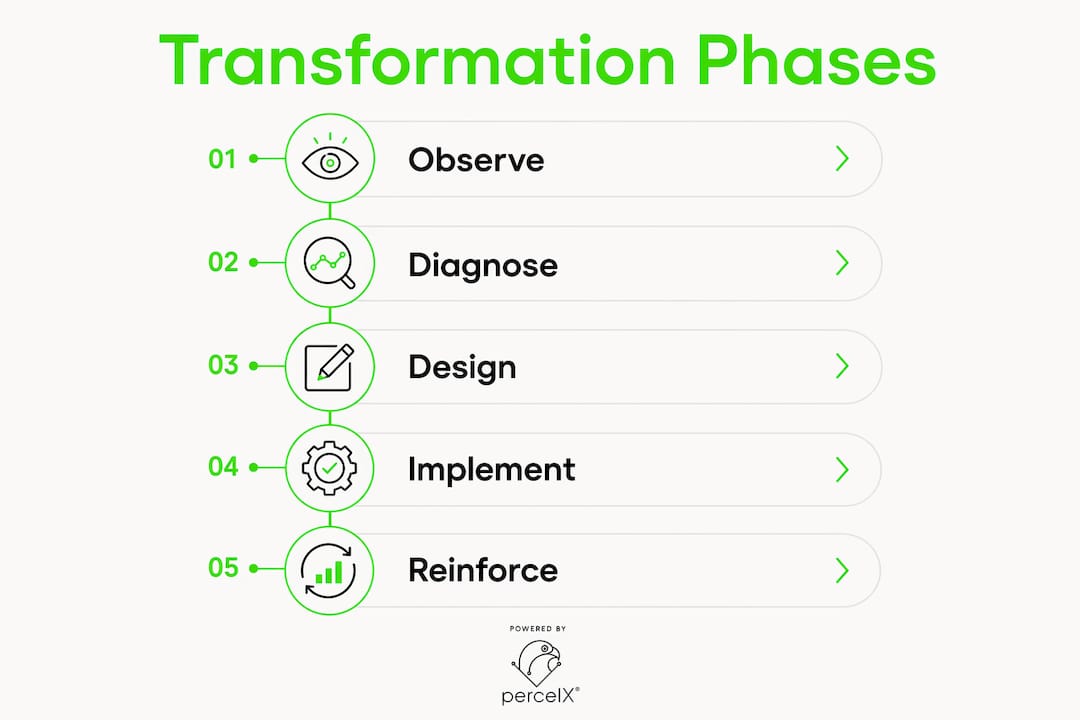
What are the key phases of the team transformation process?
Every effective team transformation follows a sequence. Skipping phases is the most common reason teams stall or regress.
-
Diagnose the current state. Mapping current workflows and identifying bottlenecks is the foundation of transformation success. You cannot fix what you have not observed. This phase reveals failure demand, hidden inefficiencies, and behavioral patterns that block performance.
-
Define transformation intent. Set clear, role-specific goals and acceptance criteria. The manager acts as the Spec Owner, specifying transformation details down to individual behaviors and success metrics. This removes ambiguity before execution begins.
-
Build the transition specification. A valid transformation plan includes role-specific current and target states, identified gaps, redesigned workflows, systems to implement, metrics, timelines, and failure conditions. This document is the team's operating contract for the change period.
-
Assign ownership roles. Three roles drive execution: the Spec Owner defines acceptance criteria, the Context Owner holds the business rationale, and the Evaluation Owner tracks progress against metrics. Each role has a distinct accountability.
-
Execute autonomously. Once the specification is clear, teams execute without constant leadership oversight. Managers define escalation policies and authorized trade-offs so team members know exactly what they decide alone versus what they escalate.
-
Reinforce and adjust. Post-rollout reinforcement of new behaviors through recognition and policy alignment is critical. Transformation does not end at launch. It stabilizes through consistent follow-through.
Pro Tip: Before writing a single goal, spend at least one week observing your team's actual workflows. The patterns you see will change what you think needs fixing.
Why does team-level transformation matter for sustainable change?
Why team-level transformation matters comes down to one word: ownership. Teams that design their own change execute it with conviction. Teams handed a change program from above comply at best.
Transformation programs relying on centralized rollout often fail to mobilize teams effectively compared to team-led approaches focused on business-critical domains. Centralized programs move slowly and lose context as they travel down the hierarchy. Team-led change retains that context because the people closest to the work are making the decisions.
The rise of AI makes this even more urgent. Agentic AI fosters team empowerment through redesign of work in prioritized business domains. Teams that learn to redesign their workflows with AI integration gain a compounding advantage over those waiting for top-down direction.
| Dimension | Centralized transformation | Team-led transformation |
|---|---|---|
| Decision authority | Executive or program office | Team and direct manager |
| Speed of adaptation | Slow, sequential rollout | Fast, parallel execution |
| Context retention | Low, diluted through hierarchy | High, owned by domain experts |
| Accountability | Diffuse across program layers | Clear, role-specific ownership |
| Sustainability | Dependent on program continuity | Embedded in team behavior |
"Assigning teams clear mandates tied to business metrics and protecting their capacity enables focused transformation efforts." — BCG
Leadership's role in this model shifts from directing to enabling. You protect your team's capacity, connect their work to business metrics, and remove blockers. That is what makes the benefits of team-level transformation stick beyond the initial rollout.
What challenges arise during team transformations and how can they be managed?
The biggest hidden threat in any team transformation is not resistance to change. It is faultlines. Faultlines cause fragmentation and resistance during second-order changes like restructures and technology overhauls. They are latent divisions based on tenure, department, or identity that activate under pressure.
Three types of faultlines appear most often during team change:
- Disparity-based faultlines: Divisions rooted in perceived status differences, such as seniority or pay grade. These surface when change threatens established hierarchies.
- Separation-based faultlines: Divisions based on differing attitudes or values. These emerge when team members disagree on the direction or purpose of the transformation.
- Variety-based faultlines: Divisions based on different functional backgrounds or expertise. These create communication gaps when cross-functional collaboration is required.
Change communication fails when it focuses on what is changing without explaining why. Anxiety fills the gap. Sequencing your communication to lead with the "why" builds commitment before you introduce the "how."
Reinforcement is equally critical after rollout. Ongoing leadership attention to reinforcement mechanisms ensures behavior change sticks. Recognition, updated policies, and performance conversations must all align with the new behaviors you are asking for.
Pro Tip: Map your team's faultlines before you announce any transformation. Knowing where the fault lines sit lets you sequence communication to reduce polarization before it starts.
You can explore types of team transformation strategies to see how different approaches address faultline risk at different stages of the process.
How to implement a team transformation plan: practical steps
Implementing a team transformation plan requires more than good intentions. It requires a structured approach that accounts for current behaviors, role-specific goals, and the capacity to actually do the work.
Here are the core implementation steps:
- Conduct context mapping. Document each role's current behaviors, workflows, and pain points before setting any targets. This is your baseline.
- Define transition intent clearly. Write role-specific acceptance criteria. Framing changes with concrete outcomes, such as saving an estimated 8 hours per person each week by reducing manual work, drives stronger acceptance than vague efficiency goals.
- Build collaborative transition specifications. Involve team members in writing the current versus target state document. Participation builds ownership.
- Allocate dedicated capacity. Backfill roles or assign temporary resources so team members can focus on transformation work without it becoming "just extra work."
- Define escalation guidelines. Explicitly state what each person decides alone and what requires manager input. Clarity here prevents bottlenecks during execution.
- Track progress with behavioral metrics. Use tools that measure behavior change, not just output. Percelx provides a 360° assessment approach that reveals hidden behavioral patterns and delivers customized transformation plans to track progress at the individual and team level.
- Review and adjust on a set cadence. Transformation is not linear. Build in review points every two to four weeks to catch drift early.
Learning how to measure team transformation over time is what separates teams that sustain change from those that slide back to old patterns.
Key Takeaways
Team-level transformation succeeds when teams own the process, diagnose before acting, and reinforce new behaviors with aligned recognition and policies.
| Point | Details |
|---|---|
| Diagnose before designing | Map current workflows and behaviors before setting any transformation goals. |
| Treat change as a specification | Write role-specific current and target states with metrics, timelines, and failure conditions. |
| Lead with the "why" | Sequencing communication to explain purpose before process reduces resistance and faultline activation. |
| Protect team capacity | Allocate dedicated time and resources so transformation does not compete with daily work. |
| Reinforce continuously | Align recognition, policies, and performance conversations with new behaviors after rollout. |
What I have learned about team-level transformation after years of working in this space
Most teams fail transformation not because they lack motivation but because they skip the diagnosis step. They jump straight to solutions before they understand the actual problem. The workflows they think are broken often are not. The ones quietly failing go unexamined.
The teams I have seen succeed share one trait: they treat transformation as a living specification, not a project plan. They write down exactly what each role looks like today and exactly what it needs to look like at the target state. Then they measure the gap honestly. That specificity is uncomfortable, but it is the only thing that produces real change.
AI and behavioral intelligence platforms like Percelx have changed what is possible here. You can now surface hidden behavioral patterns that used to take months of observation to identify. That accelerates the diagnostic phase dramatically. It also means leaders can stop guessing about where the real friction lives.
The other thing I would tell any team leader: transformation is not a destination. The teams that sustain their gains treat improvement as a continuous cycle. They build the habit of reviewing, adjusting, and reinforcing. That is what separates a team that changed once from a team that keeps getting better.
— Percell
How Percelx supports your team's growth
Percelx is a behavioral intelligence and performance platform built to help teams move from reactive patterns to intentional growth. It uses a 360° assessment approach to reveal the hidden behavioral patterns that affect decision-making, collaboration, and leadership at the team level.
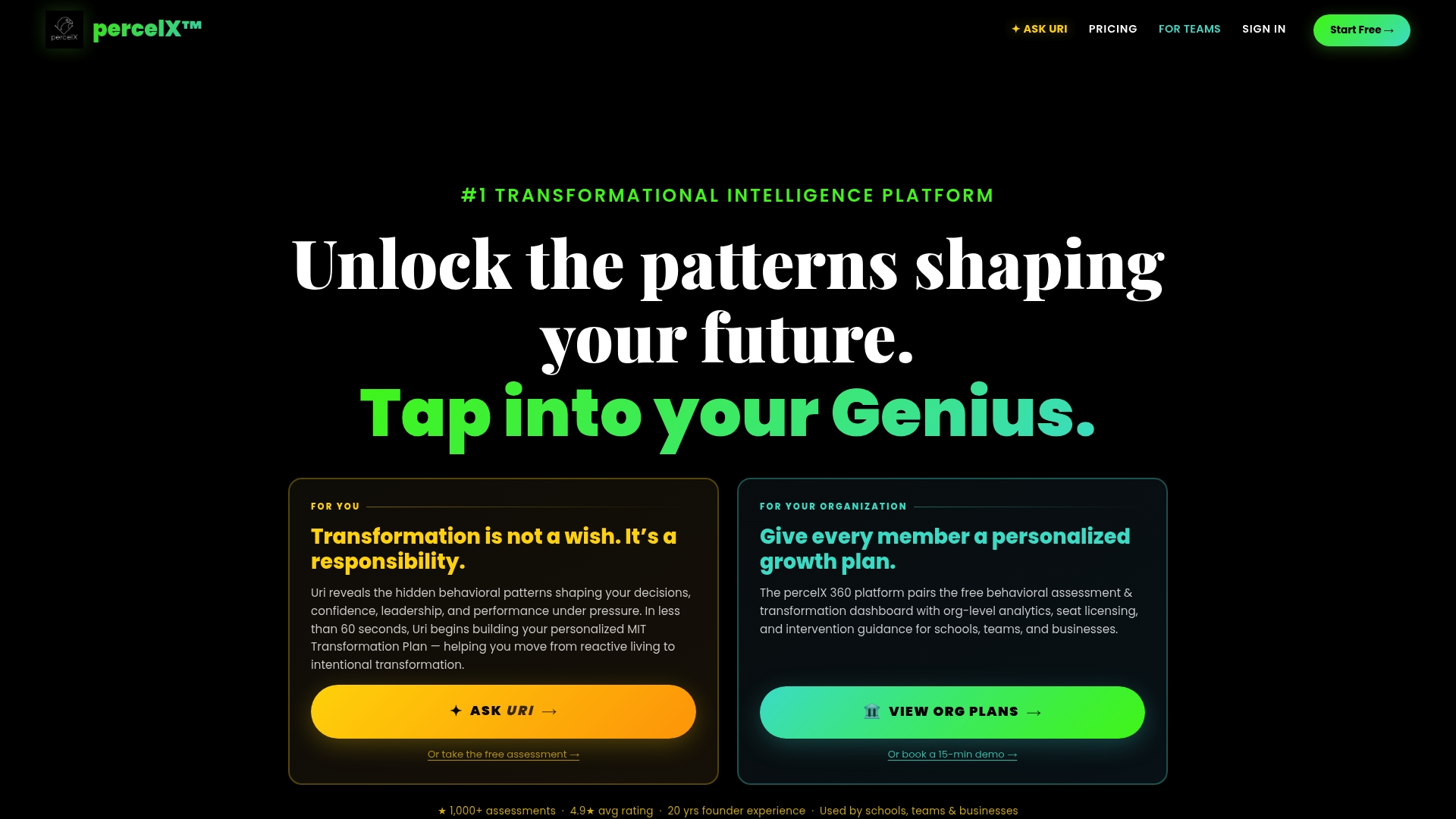
With a satisfaction rating of 4.9 stars, Percelx delivers customized team transformation plans that map directly to your team's specific gaps and goals. Whether you are in the diagnostic phase or reinforcing behavior change post-rollout, Percelx gives you the data and support to move forward with confidence. Visit percelx.org to see how behavioral intelligence can power your team's next stage of growth.
FAQ
What is team-level transformation?
Team-level transformation is the structured redesign of a team's workflows, behaviors, and roles to achieve measurably better performance. It differs from organizational change by being owned and executed at the team level.
How long does a team transformation process take?
The timeline depends on the scope of change, but most structured team transformations include review cycles every two to four weeks. Sustained behavior change typically requires ongoing reinforcement well beyond the initial rollout.
What are the biggest risks during team-level change?
Latent faultlines based on tenure, department, or identity are the most common hidden risk. They activate under change pressure and cause fragmentation if not identified and managed before the transformation begins.
Why does team-led transformation outperform centralized programs?
Team-led transformation retains domain expertise and business context that centralized programs lose as they move down the hierarchy. BCG research confirms that distributed, team-led approaches align change closer to real outcomes.
How do you measure the benefits of team-level transformation?
Effective measurement tracks role-specific behavioral metrics alongside output metrics. Tools like Percelx use 360° assessments to capture behavioral change over time, giving leaders a clear picture of progress beyond surface-level results.